 Tasselline | Latest Articles By Singaporeans, for Singaporeans Article Site for Singaporeans
Wabi-Sabi and Japandi both create a calm, uncluttered home, but the look and feel are quite different. Wabi-Sabi uses natural textures, earthy tones and imperfect finishes for a more relaxed feel. Japandi is cleaner and more structured, mixing Japanese simplicity with Scandinavian practicality.
If resale value matters, the choice should go beyond appearance. Renovation cost, upkeep, flexibility and how easily future buyers can adapt the space all matter. Reviews can also help you see how recommended interior designer in Singapore handle projects before making a decision.
Wabi-Sabi vs. Japandi: What Is the Difference?
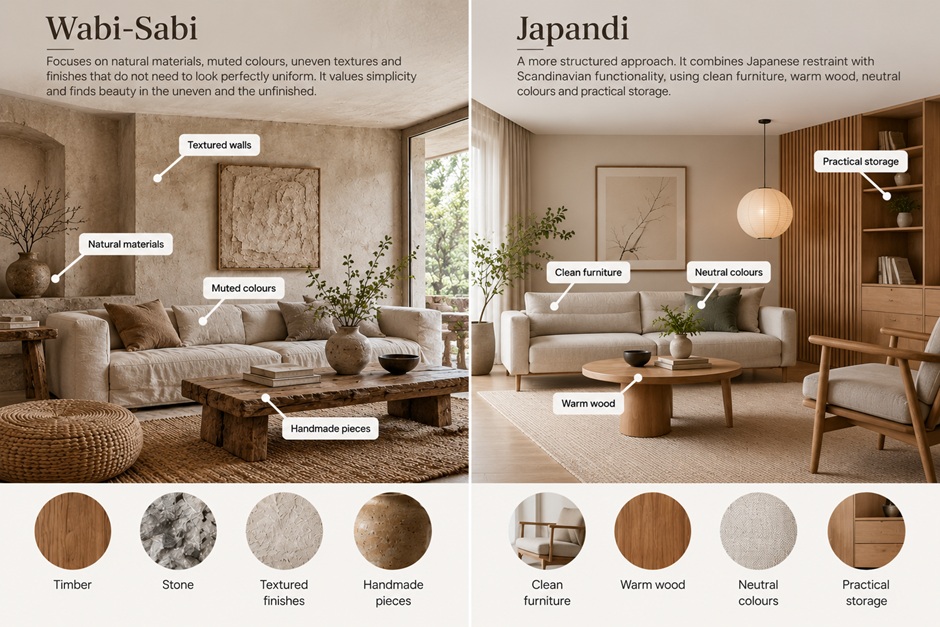
Wabi-Sabi focuses on natural materials, muted colours, uneven textures and finishes that do not need to look perfectly uniform. Think timber, stone, textured walls, handmade pieces and simple furniture.
Japandi is more structured. It combines Japanese restraint with Scandinavian functionality, using clean furniture, warm wood, neutral colours and practical storage. The overall look is usually easier to keep consistent across the home.
| Feature | Wabi-Sabi | Japandi |
| Overall feel | Relaxed and organic | Clean and functional |
| Materials | Wood, stone, clay, textured finishes | Wood, fabric, stone, simple laminates |
| Colours | Earthy and muted | Neutral, warm and understated |
| Furniture | Simple, natural and sometimes irregular | Simple, structured and functional |
| Maintenance | Depends on the natural finishes used | Generally easier to maintain |
| Resale flexibility | Depends on how personalised the design is | Usually easier to adapt |
Which Style Costs More to Renovate?
Neither style automatically costs more. The final amount depends on the materials, carpentry and finishes you choose.
Wabi-Sabi can get expensive when you start adding natural stone, textured walls, custom finishes or handmade pieces. These materials can cost more to source and take more care to maintain.
Japandi can also become costly if you invest heavily in custom carpentry, concealed storage and carefully matched materials. However, the design can be kept relatively simple without losing its character.
When comparing quotations, focus on the actual specifications rather than the style name. Check the material, quantity, carpentry details, hardware and installation costs.
Which Is Easier to Maintain?
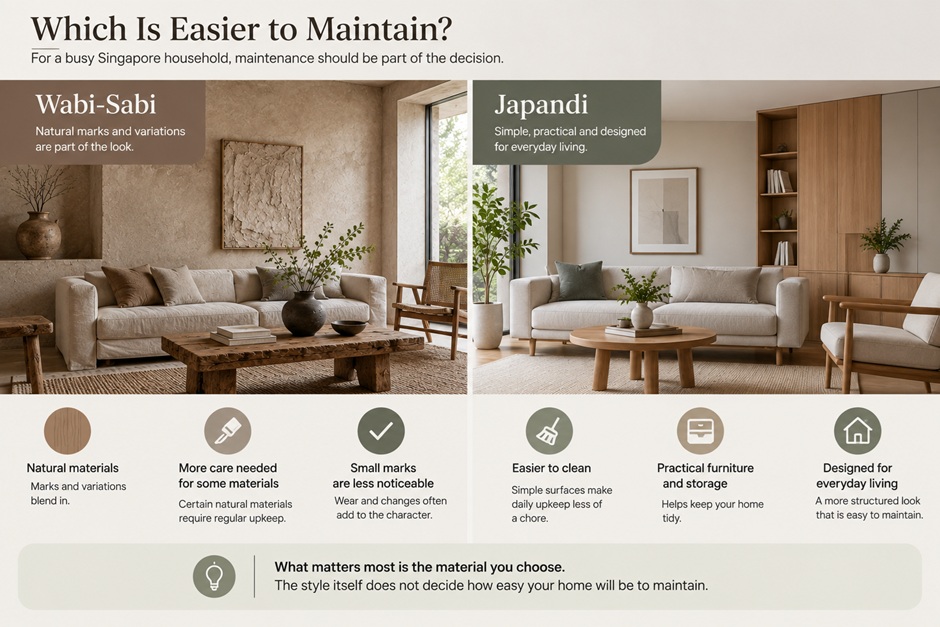
For a busy Singapore household, maintenance should be part of the decision.
Wabi-Sabi often uses materials where natural marks and variations are part of the look. That can actually work in Wabi-Sabi’s favour because small marks and changes do not always stand out. Still, some natural materials need more care than others.
Japandi is usually easier to live with day to day. Simple surfaces, practical furniture and plenty of storage make cleaning and keeping things tidy less of a chore.
What matters most is the material you choose. The style itself does not decide how easy your home will be to maintain.
Which Style Makes More Sense for Resale?
Japandi is generally easier to keep flexible for resale, but neither style automatically adds resale value.
If resale matters to you, keep the style fairly flexible. Avoid making every room heavily themed, and choose finishes and colours that future owners can easily work with. A neutral base, practical storage and functional layouts give future owners more room to change furniture, colours and décor.
Japandi may have an advantage here because its clean lines and neutral palette can work with different furniture styles. Wabi-Sabi can also work well when its natural elements are kept subtle rather than making every room heavily themed.
If you are reading a best interior design in Singapore review while planning your renovation, look beyond photographs. Check whether the projects show practical layouts and designs that can work for different homeowners.
What Should You Look for in Interior Designer Reviews?
A recommended interior designer in Singapore should not be chosen based only on attractive project photos. Reviews can give you more useful information about how the designer handles quotations, communication, changes and the renovation process.
When reading a highly recommended interior designer in Singapore review, look for specific details. Did the designer explain costs clearly? Were changes documented? Did the final design match what was discussed?
A review for an interior designer is more useful when it answers these practical questions instead of simply saying that the finished home looked good.
Think About Your Own Home First
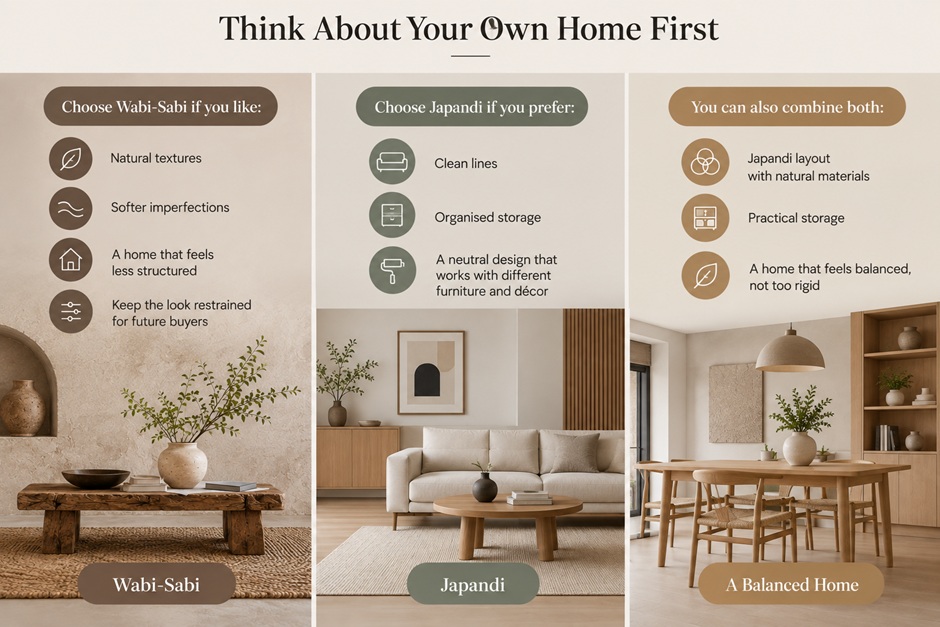
Choose Wabi-Sabi if you like natural textures, softer imperfections and a home that feels less structured. Keep the look restrained if you want to preserve flexibility for future buyers.
Choose Japandi if you prefer clean lines, organised storage and a neutral design that can work with different furniture and décor.
You can also combine elements from both. For example, a Japandi layout with natural Wabi-Sabi materials can give you practical storage without making the home feel too rigid.
What Reviews Can Tell You Before You Commit
- Good reviews for interior designers can help you shortlist firms. Read the comments for details on pricing, communication and changes.
- A recommended interior designer in Singapore should still fit your project and budget. The same applies when considering a highly recommended interior designer in Singapore.
- A review for an interior designer can help you know what to ask. If people mention unclear extra charges, ask about variations before signing.
Hausmark Pte Ltd., gives homeowners a place to compare interior designers through reviews and project information. You can use their information to see how different firms approach renovation before deciding who to contact.
So, Which One Should You Choose?
There is no single style that guarantees stronger resale value. For most homeowners, the safer approach is to keep the layout practical, use durable materials and avoid over-customising the home.
Japandi may be a better fit if you want a clean, flexible home that is easier for different buyers to picture themselves in. Wabi-Sabi is a good choice if you prefer a warmer space with natural textures and a less structured look.
If you are researching the best interior design in Singapore, do not choose based on style alone. Look at the renovation scope, quotation and reviews, and think about how the design will work for you a few years from now. Good reviews for interior designers can help you narrow down your choices, but the final decision should come down to your home, budget and what you actually like.