 Tasselline | Latest Articles By Singaporeans, for Singaporeans Article Site for Singaporeans
A cough going around school can move through a family quickly. Influenza, RSV and Mycoplasma pneumoniae can all cause respiratory symptoms in children, but they do not always look the same. Knowing what to watch for can help parents decide when home care is enough and when an international medical clinic in Orchard like CHI Health should assess the child.
Our GP in Orchard can provide professional medical consultation to determine whether your child needs further evaluation or supportive care.
Why Do Respiratory Infections Spread So Easily in Schools?
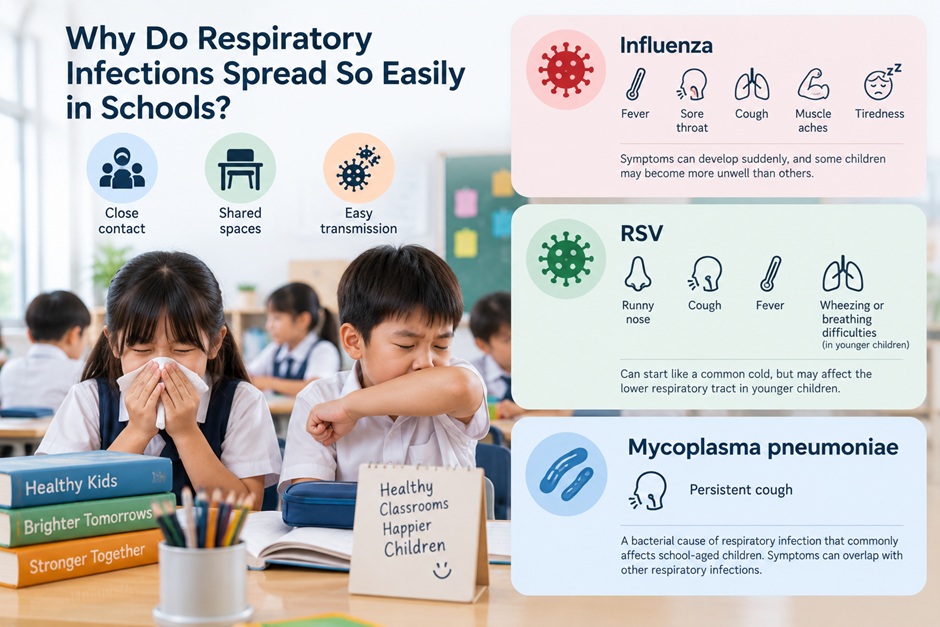
Children spend hours together in classrooms, during activities and at lunch. Close contact makes it easier for respiratory infections to pass between children, particularly when several students are unwell at the same time.
Influenza can cause fever, cough, sore throat, headache, muscle aches and tiredness. Symptoms can develop quite suddenly, and some children may become more unwell than others.¹
RSV can also begin with symptoms that look like an ordinary cold, including a runny nose, cough and fever. Younger children may develop wheezing or breathing difficulties when the infection affects the lower respiratory tract.²
Mycoplasma pneumoniae is a bacterial cause of respiratory infection that commonly affects school-aged children. A cough can become persistent, but the symptoms can overlap with other respiratory infections, so parents cannot reliably identify Mycoplasma from the cough alone.³
Flu, RSV and Mycoplasma: What Should Parents Look For?
The three illnesses can look similar at first. Rather than trying to diagnose the infection at home, parents can pay attention to how the symptoms develop and whether the child is improving.
| Illness | Common symptoms | What parents should know |
| Influenza | Fever, cough, sore throat, headache, muscle aches and tiredness | Symptoms may develop suddenly and can be more significant in some children |
| RSV | Runny nose, cough, fever, wheezing or breathing difficulty | Younger children may be more vulnerable to severe respiratory illness |
| Mycoplasma | Cough, fever, tiredness and sore throat | The cough may persist and can resemble other respiratory infections |
A child does not necessarily need testing every time they develop a cough or fever. A doctor can assess the symptoms and decide whether testing or further investigation is appropriate.
How Can Parents Reduce the Spread at Home and School?
You cannot prevent every respiratory infection when children spend much of their day together. Simple habits can still reduce opportunities for infections to spread.
Parents can encourage children to:
- Wash their hands regularly, especially before eating.
- Cover their mouth and nose when coughing or sneezing.
- Avoid sharing cups, bottles and eating utensils.
- Avoid close contact with classmates when unwell.
- Stay home when they are too sick to participate normally in school activities.
- Keep up with recommended vaccinations, including influenza vaccination where appropriate.
Hand hygiene can help limit the spread of respiratory infections in schools and childcare settings, although how effective it is can depend on the setting and the measures being used.⁴
For families looking for a family clinic in Orchard in Singapore, these simple precautions can also be discussed with a doctor, especially when infections seem to be making their way from one child to another at home.
When Should a Child See a Doctor?
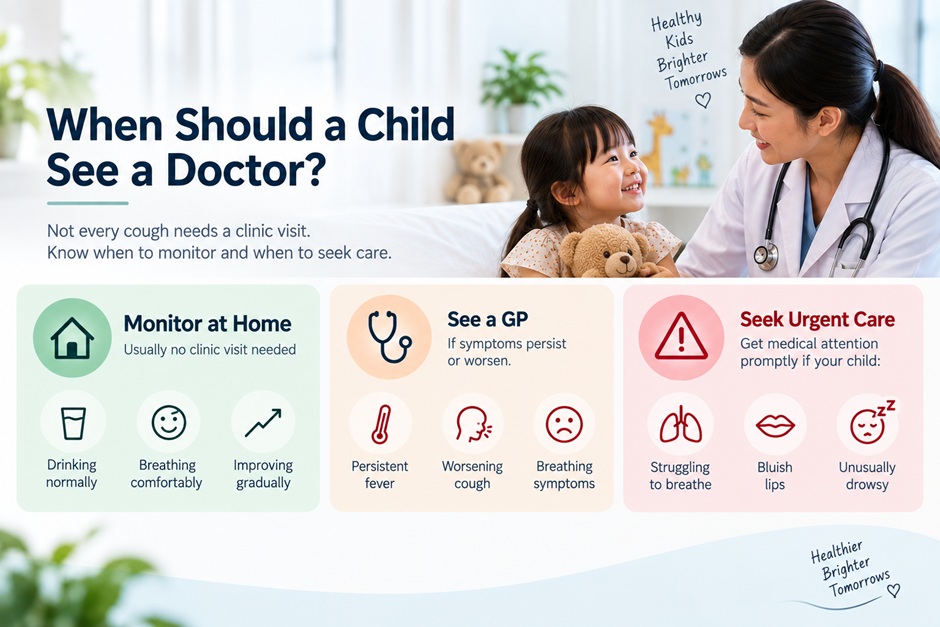
A mild cough or runny nose does not always require a clinic visit. If the child is drinking normally, breathing comfortably, has reasonable energy and is gradually improving, supportive care at home may be appropriate.
The situation changes when symptoms persist or become worse. A GP in Orchard can assess a child who has a persistent fever, worsening cough, breathing symptoms or a noticeable change in their usual behaviour.
Parents should seek prompt medical attention if a child is struggling to breathe, has bluish lips, appears unusually drowsy, becomes dehydrated or deteriorates quickly.
What If the Cough Is Not Going Away?
A persistent cough with phlegm does not automatically mean that a child has a bacterial infection. Wet coughs can occur with different respiratory conditions, and the colour of mucus alone cannot establish the cause.
If a persistent cough with phlegm continues for several weeks, affects sleep or daily activities, or occurs with fever, chest discomfort or breathing problems, arrange a medical assessment. Persistent cough in children has several possible causes, so the doctor may need to consider the child’s history, symptoms and examination before deciding whether further tests are needed.⁵
This is where CHI-Health can be useful for families who want their child’s symptoms assessed rather than assuming that every cough is flu, RSV or Mycoplasma.
Should a Child Go Back to School While Still Coughing?
A cough can remain after a respiratory infection has started to improve. Its presence alone does not necessarily mean that a child needs antibiotics or must stay away from school indefinitely.
Look at the child’s overall condition instead. Are they eating and drinking normally? Do they have enough energy for normal activities? Is the fever gone? Are they breathing comfortably?
If the child remains clearly unwell, has a fever or develops worsening symptoms, staying home and seeking medical advice is more appropriate.
What If Several Family Members Become Sick?
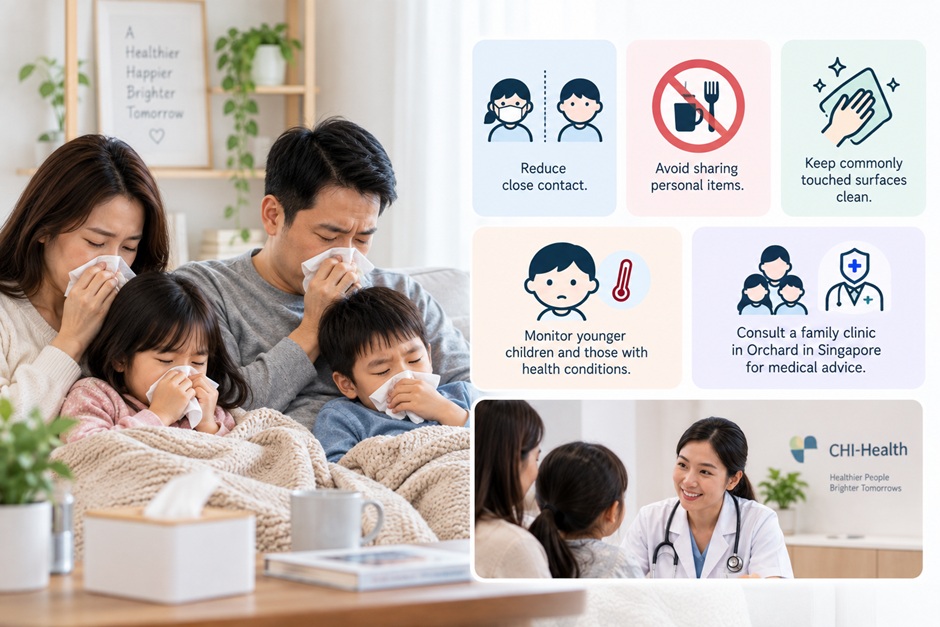
Respiratory infections can move quickly through a household once one child becomes ill. Where practical, reduce close contact, avoid sharing personal items and keep commonly touched surfaces clean.
If several family members develop symptoms, pay attention to who is recovering and who is getting worse. A younger child or a child with an underlying health condition may need closer monitoring.
A family clinic in Orchard in Singapore can be a practical option when parents need medical advice for more than one family member. CHI-Health provides consultations for children and families, allowing symptoms to be assessed rather than assuming that everyone has the same infection.
When Is a Respiratory Illness Worth Checking?
Parents do not have to wait until a child is seriously unwell before asking for medical advice. A consultation can help determine whether symptoms are following an expected course or whether the child needs further assessment.
Consider seeing a GP in orchard if:
- Fever persists, returns or becomes higher.
- The cough is getting worse rather than improving.
- A persistent cough with phlegm is affecting sleep, eating or normal activities.
- The child is breathing faster or working harder to breathe.
- There is wheezing, chest pain or unusual tiredness.
- The child is drinking much less or showing signs of dehydration.
- Symptoms improve and then become noticeably worse again.
For families considering a family clinic in Orchard in Singapore, the important point is not simply whether the clinic can identify a particular infection. The doctor should be able to assess the child’s symptoms, look for signs of complications and explain what to do next.
Keeping School Respiratory Illnesses in Perspective
Flu, RSV and Mycoplasma can all cause cough and fever, but they are different infections and can affect children differently. Most uncomplicated respiratory infections improve with supportive care, while some children need closer medical assessment.
Parents should focus less on guessing the exact infection and more on how the child is doing. Worsening symptoms, breathing difficulties, persistent fever or a persistent cough with phlegm should not be ignored.
If you are unsure whether your child’s symptoms need assessment, CHI-Health can provide a medical consultation and help determine the appropriate next step.