 Tasselline | Latest Articles By Singaporeans, for Singaporeans Article Site for Singaporeans
A pest problem can quickly become a food safety problem. Cockroaches in the kitchen, rodents near ingredients or insects around waste areas can raise concerns about how the premises are being maintained. That is why pest control services should be part of a food business’s regular maintenance, not something arranged only after an infestation appears.
For restaurants, cafés and food manufacturers across Malaysia, good pest control comes down to prevention, regular checks and knowing what to do when signs of activity appear. This is where partnering with a licensed pest control provider like 1800NoPests makes a difference. With expertise in handling Malaysia’s climate and pest challenges, 1800NoPests helps food businesses establish preventive programs that protect both food safety and reputation.
What Are the Pest Control Requirements for Food Businesses in Malaysia?
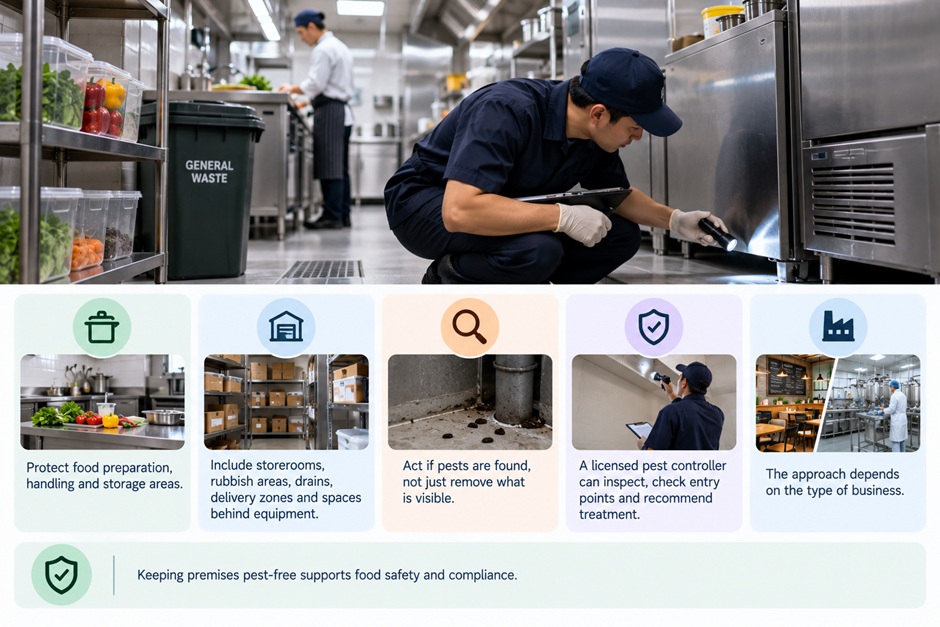
Food businesses need to protect areas where food is prepared, handled and stored from pest activity. This includes the parts customers never see, such as storerooms, rubbish areas, drains, delivery zones and spaces behind kitchen equipment.
If pests are found, the business needs to act rather than simply remove the insects or rodents that are visible. A licensed pest controller can inspect the premises, look for possible entry points and recommend suitable treatment.
The approach will depend on the type of business. A café may have a smaller area to monitor, while a food manufacturer may need to manage production rooms, storage facilities and loading areas.
Where Do Cockroaches and Rodents Enter Food Premises?
Pests do not always use an obvious opening. Gaps around pipes, damaged screens, poorly sealed doors, drains and loading areas can all provide access.
Once inside, kitchens and storage rooms give pests what they need. Food residue, water, warmth and clutter can make these areas comfortable places to hide.
This is why inspections should cover the whole premises instead of focusing only on the spot where a cockroach or rodent was seen.
What Should a Commercial Pest Control Programme Include?
A proper programme should look at the building as a whole. It should cover routine checks, monitoring, prevention and treatment where necessary.
| Area | What to check | What to address |
| Kitchen | Drains, equipment and cupboards | Food residue and moisture |
| Food storage | Shelves, packaging and corners | Damaged packaging and pest signs |
| Waste areas | Bins, drains and surrounding spaces | Waste build-up and access points |
| Loading areas | Doors, gaps and deliveries | Possible entry routes |
| External areas | Drains and building edges | Clutter, standing water and hiding places |
Certified pest control should work alongside cleaning and maintenance. Treatment alone will not solve the problem if a leaking pipe, open gap or accessible food source remains.
How Often Should Restaurants and Food Factories Have Pest Inspections?
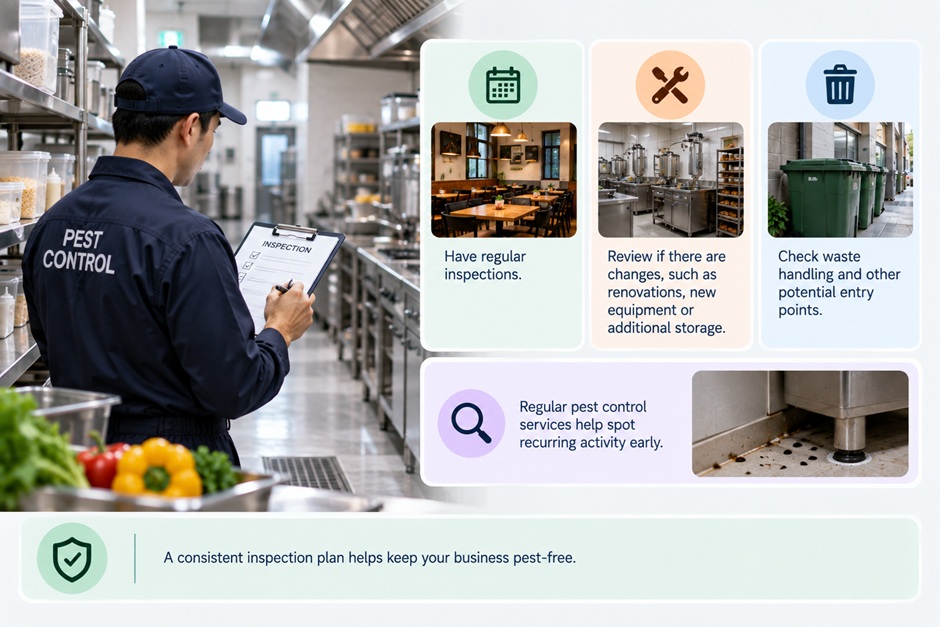
There is no single inspection routine for every food business. A busy restaurant may face different risks from a food factory or a small café.
What matters is having regular checks and reviewing the arrangement when something changes. Renovations, new equipment, additional storage or changes in waste handling can create new pest entry points.
Regular pest control services can also make recurring activity easier to spot. If the same area keeps showing signs of pests, the business can investigate why instead of repeatedly dealing with the same sightings.
How Should Food Businesses Choose a Pest Control Provider?
Pest treatment around food requires careful planning. The business needs to know what is being treated, how the treatment will be carried out and what precautions staff need to follow.
A licensed pest controller should be able to explain the proposed treatment and any steps the business needs to take before and after the visit.
1800NoPests can help businesses assess their premises and identify areas that may need closer attention, particularly when pest activity keeps returning.
What Can Restaurants Do to Prevent Pest Infestations?
Professional treatment is only one part of pest prevention. Everyday housekeeping can make a noticeable difference.
- Store ingredients in sealed containers.
- Clean food spills promptly.
- Remove waste regularly.
- Keep bins clean and properly closed.
- Fix leaking taps and pipes.
- Keep drains clean and clear.
- Check doors, windows and screens for gaps.
- Keep storage areas free from unnecessary cardboard and clutter.
Pest control experts can also point out less obvious conditions that may be giving pests somewhere to enter or hide.
What Pest Control Records Should Food Businesses Keep?
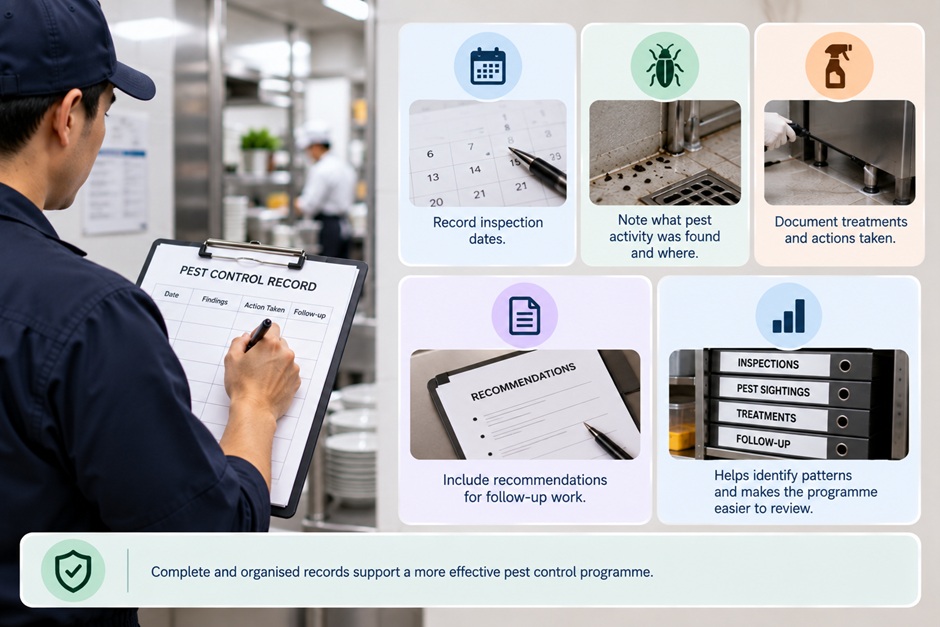
The records should show what pest activity was found, where it was found and what was done about it. Businesses can record inspection dates, pest sightings, monitoring results, treatments and recommendations for follow-up work.
These details become particularly useful when the same problem keeps coming back. Repeated cockroach activity near one drain or rodent signs around a loading area may reveal a pattern that is easy to miss from individual sightings.
Keeping this information together also makes a certified pest control programme easier to review.
When Should a Food Business Arrange Pest Treatment?
A business does not need to wait for a major infestation. Droppings, gnaw marks, damaged packaging, egg cases, dead pests, unusual smells or repeated sightings are all reasons to investigate.
Pest control experts can assess whether the signs point to an active infestation or whether a building or maintenance issue needs attention first.
Treatment may also be worth arranging when pest activity increases after renovation, construction or changes to how the premises are used.
How Can Food Businesses Manage Pest Control Between Visits?
Staff are often the first to notice something has changed. They should know which signs to report and should not ignore issues such as leaking pipes, damaged screens, open gaps or recurring pest sightings.
A routine that combines staff checks with certified pest control makes it easier to catch problems early. 1800NoPests can help businesses identify areas that need monitoring and decide how the routine should be managed.
For businesses that need ongoing pest control services, the focus should remain on prevention as well as treatment. 1800NoPests can help keep that process practical, so pest issues are dealt with before they interfere with food operations.