 Tasselline | Latest Articles By Singaporeans, for Singaporeans Article Site for Singaporeans
A fire extinguisher can sit in the same spot for months without anyone touching it. But is it still ready to use? The pressure may have dropped, the safety seal could be broken, or the cylinder may have rusted. A few simple checks can help you spot these problems early. Firetronics covers the importance of keeping fire safety equipment in working condition, rather than waiting until an emergency to check it.
Why Should You Check Fire Extinguishers Regularly?
Most people don't think about fire extinguishers unless they need one. That's where problems can go unnoticed. A unit may look fine from the outside but still need servicing. It could have low pressure, a damaged hose or an overdue service date.
Check your equipment as part of regular building maintenance. The checks don't take long, and they can help you spot issues that need attention. Keep a note of what you find, especially if something needs to be repaired or replaced.
Check the Pressure Gauge and Cylinder
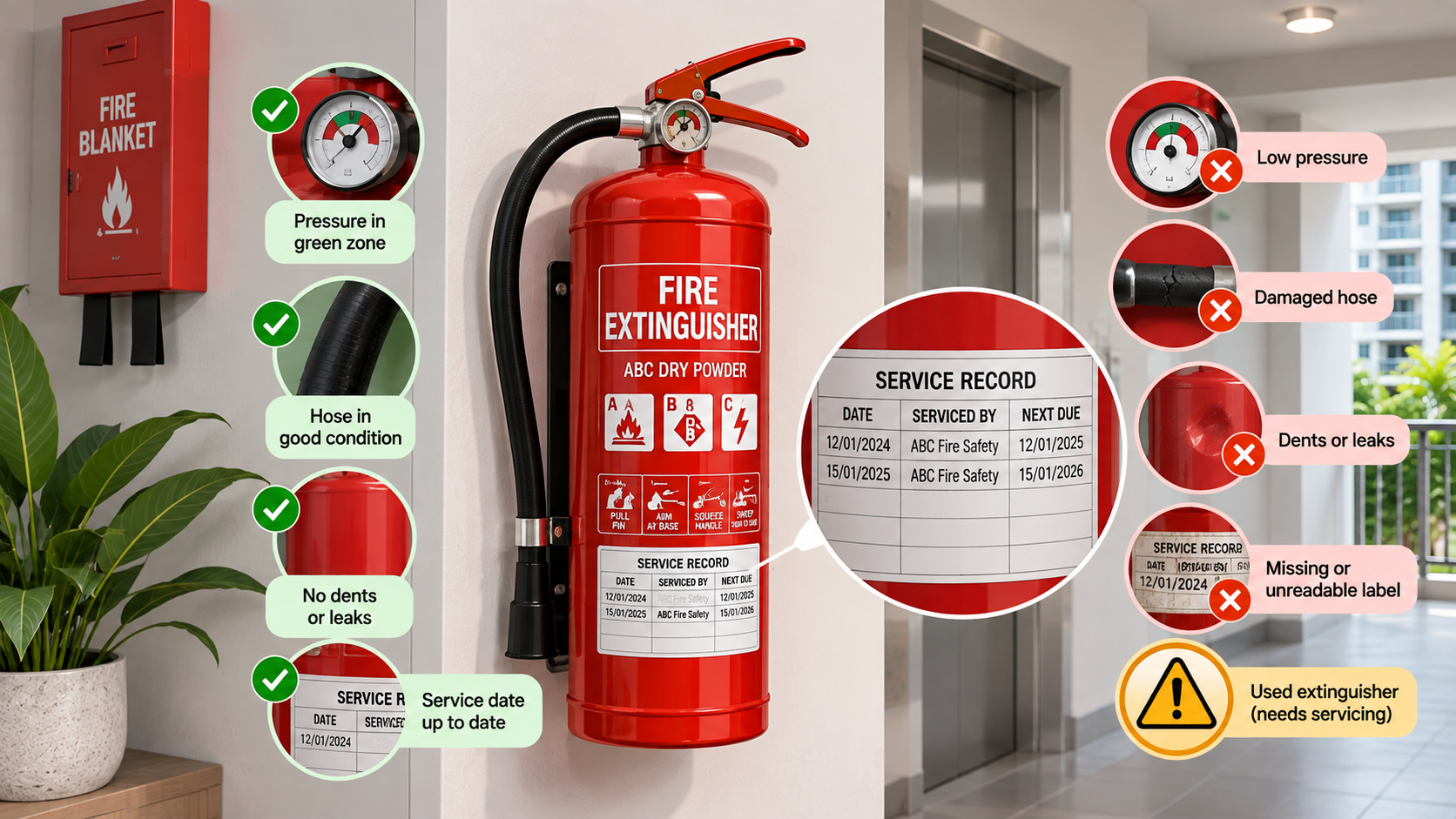
Many portable extinguishers have a pressure gauge. The needle should be within the marked operating range, which is often shown in green. If it sits outside that range, the fire extinguisher needs to be checked by a qualified technician. Some models don't have a gauge, so follow the instructions on the unit.
Now take a look at the cylinder itself. Is there rust, a dent, a crack or any sign of leakage? Check the hose, nozzle and handle as well. Make sure the nozzle isn't blocked and the instructions on the label can still be read. Don't try to fix a damaged extinguisher yourself. Get it inspected.
A Quick Inspection Checklist
|
Part to check |
What to look for |
What to do |
|
Pressure gauge |
Needle in the marked range, if fitted |
Get it checked if the reading is outside the range |
|
Cylinder |
Rust, dents, cracks or leaks |
Ask a technician to inspect it |
|
Hose and nozzle |
Damage, blockage or residue |
Arrange servicing |
|
Safety pin and seal |
Both are present and intact |
Get the unit checked if either is missing |
|
Service label |
Date and service details are readable |
Check when the next service is due |
|
Location |
Easy to see and reach |
Move anything blocking access |
Check the Safety Pin, Seal and Location
The safety pin should be in place, with the tamper seal intact. These help prevent accidental use and show whether the unit may have been handled. Don't pull the pin just to see if the extinguisher works. If the seal is broken or the unit has been used, it needs to be checked before it goes back in place.
Also, make sure nothing is blocking the extinguisher. Don't stash it behind boxes, furniture, or anything else—it needs to stay in its designated spot, easy for anyone to grab in a hurry. Steer clear of hot or damp spots, too. Heat and moisture can ruin the unit.
When Does a Fire Extinguisher Need Servicing?
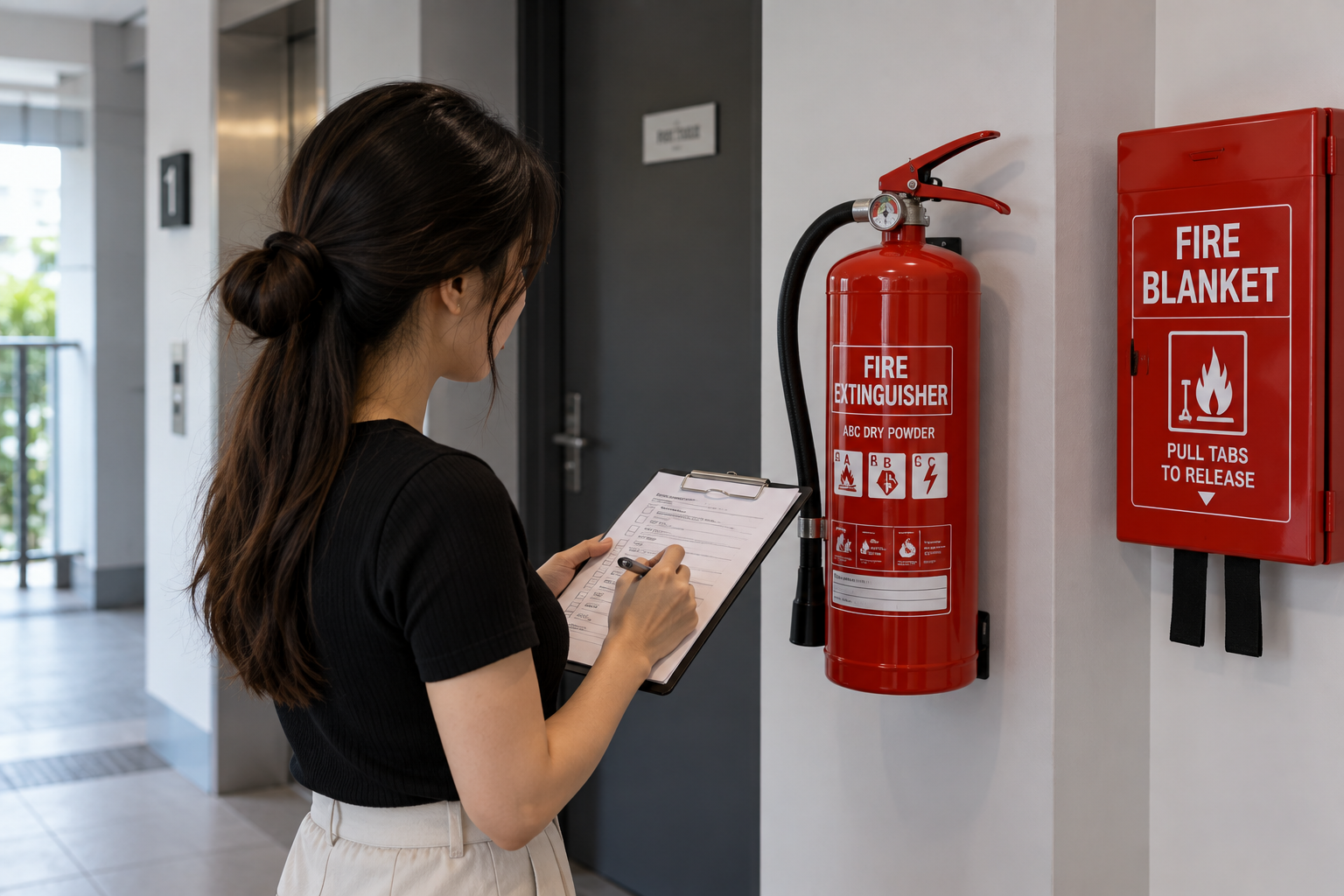
A visual check can show obvious problems, but it can't tell you everything about the inside of an extinguisher. Professional servicing is needed to check its condition and decide whether it can stay in use, needs recharging or should be replaced.
Inspection and Service Date
Take a close look at the service label on each fire extinguisher. You’ll usually find the last inspection date and when the next service is due right there. Some extinguishers also list their manufacture date or even when they expire, so it’s worth checking for those details, too. Service requirements can vary, so follow the manufacturer's instructions and local fire safety rules.
Don't wait for the next service date if the extinguisher has been used, damaged or is leaking. Low pressure is another reason to get it checked. And if the service label is missing or too worn to read, ask a qualified technician to assess the unit. An extinguisher isn't automatically ready for use just because its printed expiry date hasn't passed.
Don't Forget Smoke Detectors and FM200 Systems
Smoke detectors are there to alert people when smoke is present. Test them according to the manufacturer's instructions. Check the batteries or power supply, too. Replace the batteries or the detector itself when required.
Some buildings also have fixed fire suppression systems, such as FM200, in enclosed areas. These are different from portable extinguishers and need their own maintenance checks. A qualified technician should inspect the system and its components. Smoke detectors, fire extinguishers and FM200 systems all have different roles, so don't treat their maintenance as one task.
How to Keep Your Fire Safety Checks on Track
You don't need a complicated system to keep track of inspections. Pick a person to check the equipment and write down anything that needs attention. The important thing is to follow up on faults and not let service dates slip by.
Keep a Simple Inspection Record
During each check, make a note of the following:
-
Is the extinguisher still in its proper place? Make sure nobody has moved it or left things in front of it.
-
Check the gauge, if there is one. Look over the cylinder for rust, dents or leaks.
-
Have a look at the hose, nozzle, safety pin and seal. Don't ignore a missing or damaged part.
-
Read the service label. Note the next service date so it doesn't get missed.
-
Found a problem? Write it down and arrange for a technician to check the unit. Don't put it off.
-
Check smoke detectors and FM200 systems as well, but follow their own maintenance instructions.
Keep these records somewhere easy to find. Add the service reports, too, so you can see what work has already been done. Firetronics can help property owners and businesses review their equipment and understand what maintenance may be needed.
Keeping Fire Safety Equipment Ready
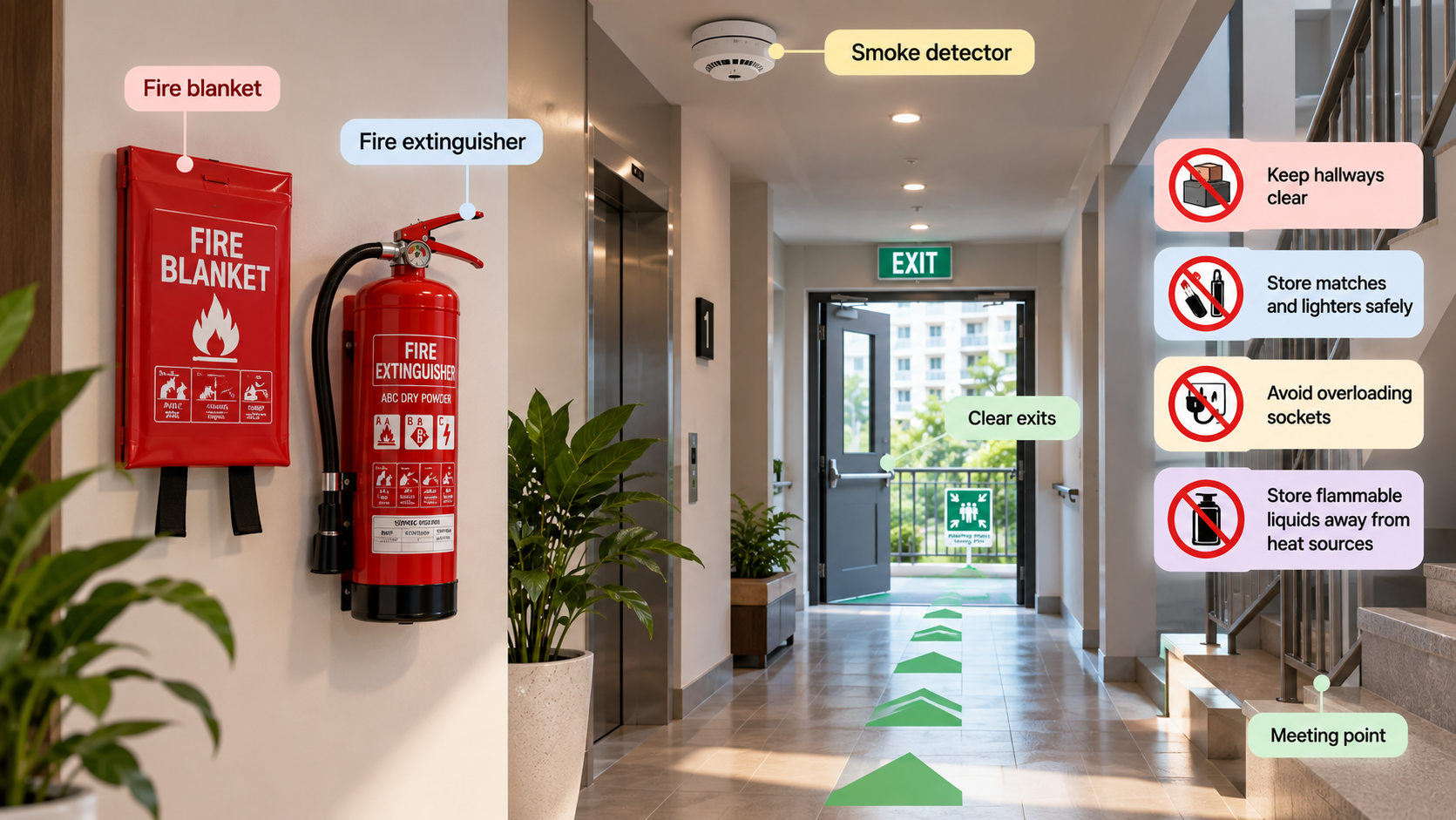
Having fire extinguishers on the premises is only part of fire safety. They need to be suitable for the fire risks nearby, easy to reach and properly maintained. Everyone should also know how to leave the building and where to meet outside. Keep exits and hallways clear, and don't try to tackle a fire if it is spreading or blocking your way out.
A quick check now can help you catch a problem before the equipment is needed. Arrange servicing when it's due, and replace any unit that a technician considers unfit for use. Firetronics can assist with reviewing fire safety equipment and its maintenance needs, so you know what needs attention and what is already in order.