 Tasselline | Latest Articles By Singaporeans, for Singaporeans Article Site for Singaporeans
Turning 40 can bring a few surprises when it comes to eyesight. Small print suddenly seems harder to read. Driving at night can be tough, especially when oncoming headlights leave you squinting from the glare. It’s not always a sign that something’s wrong with your eyes, but it’s still worth paying attention to. Dr Natasha Lim Eye Centre recommends that adults get a basic eye checkup, just to keep an eye out for age-related changes like cataracts in Singapore.
Why Does Eye Health Need More Attention After 40?
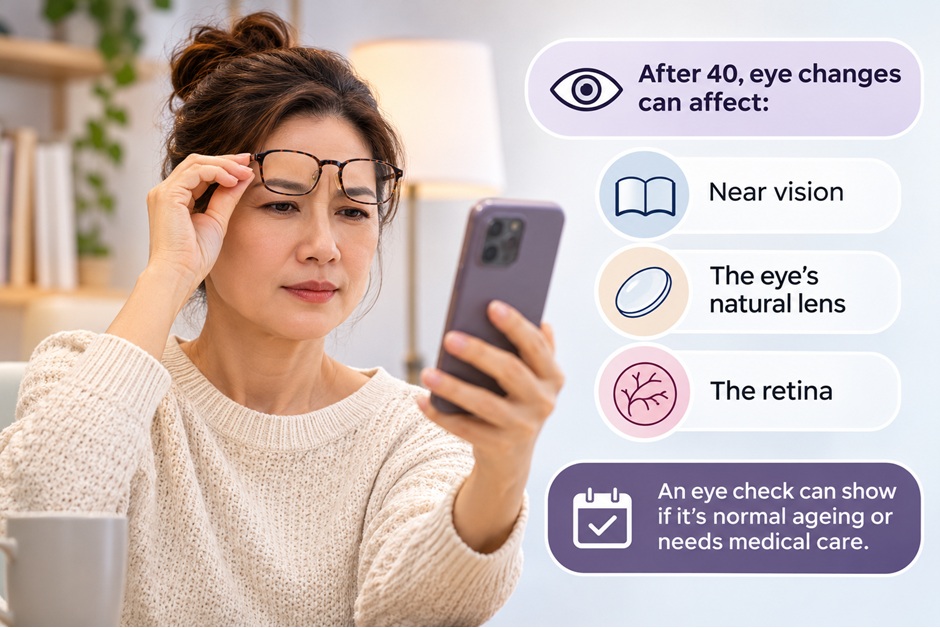
Some eye changes happen so gradually that people adjust without realising it. You might hold your phone further away to read a message or switch on another light when reading. It becomes part of the routine.
Age-related changes can affect near vision, the eye’s natural lens and the retina. Getting your eyes checked makes it easier to tell if what you’re experiencing is just normal ageing or something that needs a doctor’s care.
Presbyopia and Near Vision Changes
Presbyopia is just one of those things that comes with getting older. The lens in your eye stiffens up little by little, and you end up struggling to focus up close. It often becomes noticeable around the age 40, especially when reading small print or looking at a phone.
Maybe you catch yourself holding books farther away, or you need more light to read without straining your eyes. Sometimes, after staring at something up close for a while, you might feel wiped out or get a headache. Lots of people go through all of this, you’re definitely not alone.
Presbyopia in Singapore is a common concern among adults entering middle age. At Dr Natasha Lim Eye Centre, an eye assessment can help establish whether these symptoms are related to presbyopia or another vision problem. Reading glasses, bifocal lenses, progressive lenses and contact lenses may be considered.² The appropriate option depends on individual vision needs.
Adults searching for information about presbyopia in Singapore should understand that the condition is a normal age-related change, although the degree of difficulty with near vision varies from person to person.
Cataracts and Cloudy Vision
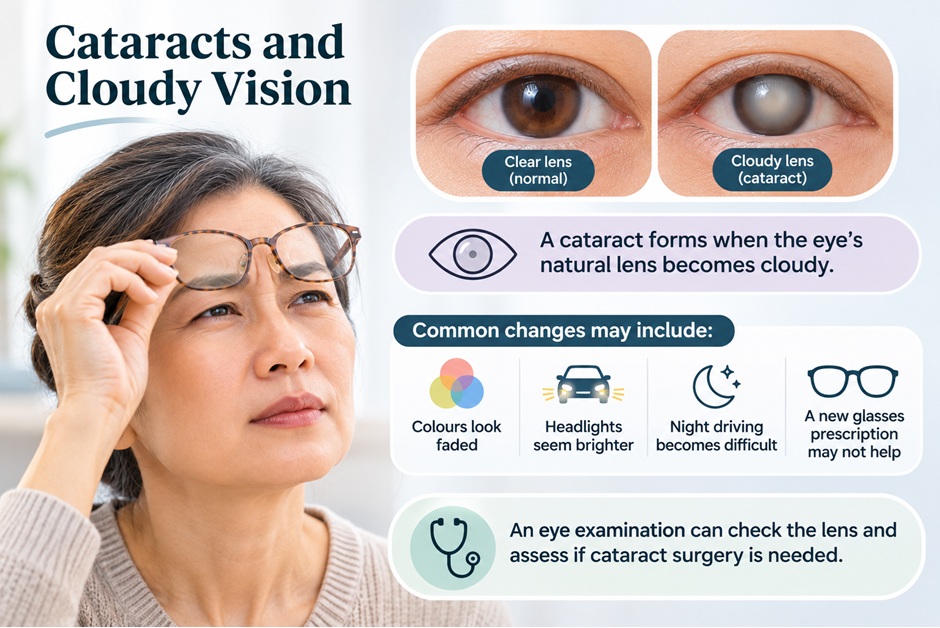
A cataract forms when the eye’s natural lens becomes cloudy. Age is a major risk factor, although diabetes, previous eye injuries, certain medications and ultraviolet exposure can also contribute.
The change is usually slow. Colours may look faded, headlights can seem unusually bright, and night driving may become difficult. You might even find that changing your glasses prescription no longer makes much difference.
An eye examination allows the clinician to check the lens and assess how much the clouding affects vision. Cataract surgery may be discussed when the condition begins interfering with everyday activities.
What Eye Conditions Can Develop Without Obvious Symptoms?
Not every eye condition causes pain or an immediate change in vision. Some develop quietly. This is one reason adults should not rely only on whether they can read a book or see clearly across a room.
Macular Degeneration and Central Vision
Age-related macular degeneration affects the macula, the central part of the retina responsible for detailed vision. It can make everyday activities such as reading, recognising faces and seeing fine details more difficult.
Early changes may go unnoticed. Later, straight lines might appear wavy, letters may seem missing, or a dark patch may develop in the centre of vision.
Macular degeneration in Singapore is a relevant concern for ageing adults. Research involving adults in the local population has examined the condition and its associated risk factors
Anyone noticing distorted central vision should arrange an eye assessment rather than assuming it is simply part of getting older. An assessment for macular degeneration in Singapore can help identify retinal changes and determine whether further monitoring or treatment is needed.
Why Early Detection Matters
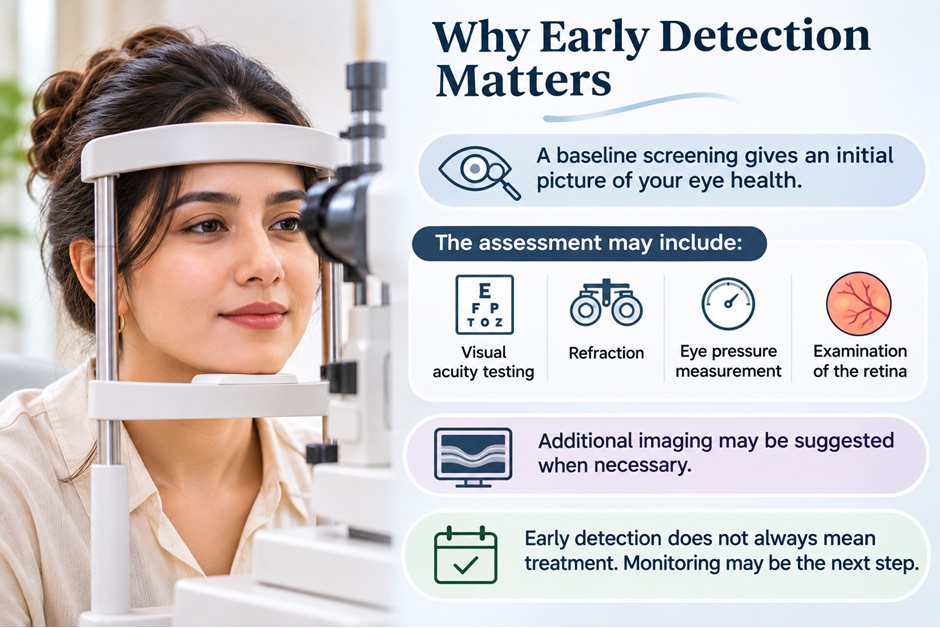
A baseline screening gives the clinician an initial picture of your eye health. If you return for future examinations, clinicians can compare those findings to identify changes.
Depending on your age, symptoms and medical history, the assessment may include visual acuity testing, refraction, eye pressure measurement and an examination of the retina. Additional imaging may be suggested when necessary.
Finding a condition early does not automatically mean treatment is required. Sometimes, the next step is simply monitoring it at appropriate intervals.
What Happens During a Baseline Eye Screening?
The appointment usually starts with a discussion about your eyesight and general health. Expect questions about existing medical conditions, medication, previous eye problems and family history. Diabetes and a family history of certain eye diseases are particularly relevant.
Common Checks and What They Assess
The tests vary from person to person. A baseline examination may include:
- Visual acuity test: Checks how clearly you can see at different distances.
- Refraction assessment: Determines whether you need glasses or a change in prescription.
- Eye pressure measurement: Measures intraocular pressure, which helps assess glaucoma risk.
- Slit-lamp examination: Allows the clinician to examine the front of the eye, including the lens.
- Retinal examination: Checks the retina and macula for visible changes.
Warning Signs That Should Not Be Ignored
Some vision changes can wait for a scheduled appointment. Others need prompt medical attention. Pay attention to the following symptoms.
| Warning sign | What it may indicate |
| Blurred or cloudy vision | Cataract or a refractive change |
| Difficulty reading small print | Presbyopia or another vision problem |
| Glare around lights | Possible cataract |
| Wavy or distorted straight lines | Possible macular changes |
| Sudden vision loss or new floaters | An urgent eye problem |
Sudden vision loss, a curtain-like shadow, flashes accompanied by new floaters or severe eye pain should be assessed urgently. Do not wait for a routine screening.
When Should Adults See an Eye Specialist in Singapore?
If you’re over age 40, it’s smart to get a comprehensive eye exam, even if you think your vision is fine. How often you need a checkup really depends on what the doctor finds, your health history, and your specific risks. For example, if you have diabetes or already deal with eye problems, you’ll probably need to go in more often.
Presbyopia correction in Singapore doesn’t fit everyone the same way. Some people go for reading glasses, others pick progressive lenses or contact lenses. Cataracts and macular degeneration? Those need their own assessments, so you shouldn’t just assume every vision change means you only need a new prescription.
Presbyopia correction in Singapore also depends on your daily life, what kind of prescription you already have, and if you’re managing any other eye issues.
Dr Natasha Lim Eye Centre makes it easy for adults to get assessed and actually understand their results. Dr Natasha always says, don’t wait until simple things feel tough, get checked sooner rather than later. A baseline exam goes a long way in tracking your eye health as you age, especially when it comes to spotting cataracts in Singapore early.