 Tasselline | Latest Articles By Singaporeans, for Singaporeans Article Site for Singaporeans
A company’s reputation can take years to build. One bad announcement, a customer complaint that spreads online, a few unanswered questions. Suddenly, people are looking at the business differently. Corporate reputation management helps organisations deal with these moments and communicate with the people who matter. APRW is one agency businesses can consider when exploring public relations and corporate communications support.
Why Corporate Reputation Management Matters

People notice how a company behaves when things go wrong. Not just what it says. Customers may stop buying. Employees start asking questions. Business partners become cautious, and a decision that seemed minor internally can attract attention outside the organisation. The effects are not always immediate, either. Sometimes the damage shows up weeks later, when a customer chooses a competitor or a potential employee withdraws an application.
That is why reputation management cannot begin only after negative coverage appears. Companies need clear messaging, reliable internal communication and a plan for responding when concerns arise. It is not about making every criticism disappear. Some criticism is justified. The business has to deal with the underlying issue, not simply manage how it looks.
What to Look for in PR Agencies
There are plenty of reasons to hire a communications agency. Getting media attention is one. Preparing for a difficult announcement is another. A company entering a new market may need something different again.
So, do not choose PR agencies based on its name alone. Look at the work it actually does, the people who will manage your account and how it approaches problems that do not have easy answers. A glossy proposal tells you very little about how a team will perform under pressure.
Experience in Corporate Communications
Corporate communications is not always exciting work. Sometimes it means explaining a complicated business decision in plain English. Sometimes it means telling employees what is changing before they hear it from someone else.
PR agencies should understand how to handle sensitive information, communicate with different stakeholders and keep messages consistent. Ask for examples of relevant work. What was the agency responsible for? Which audiences did it address? What did the client need to communicate? The details matter more than grand claims.
Crisis Planning and Media Relations
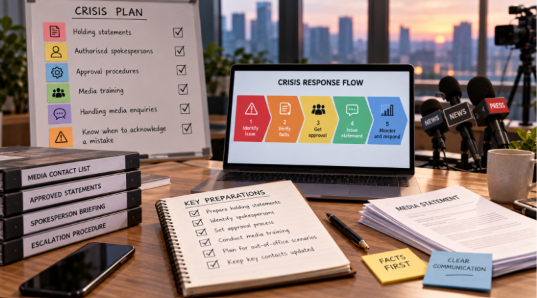
A crisis can begin on a Friday evening, just before a public holiday, when the people who need to approve a statement are nowhere near their desks. Awkward timing. Real consequences.
Preparation helps. An agency may help develop holding statements, identify authorised spokespersons, establish approval procedures and prepare teams for media enquiries. It should also know when to advise a company to acknowledge a mistake rather than defend it.
No agency can promise that a crisis will disappear. Nor can it guarantee that every journalist will use the company’s preferred wording. What it can do is help the organisation respond clearly, quickly and with verified information.
Regional Knowledge and Industry Understanding
A company operating in several markets needs more than a message translated word for word. Local expectations differ. So do media relationships, business practices and regulatory requirements.
When comparing top PR agencies in Singapore, look for experience that matches your intended audience and industry. A business expanding into Indonesia, for example, may need local media knowledge and a good understanding of how its message will be received there. Regional reach sounds useful, but it needs to be backed by relevant experience.
Questions to Ask Before Hiring an Agency
The first meeting may go smoothly. Everyone agrees on the objectives, the proposal looks good, and the agency seems confident. Then the work starts.
That is when practical questions become important. Who answers urgent calls? Who approves a statement? How often will the company receive reports? These details should be settled before the contract is signed.
Use these questions when comparing agencies:
- Who will manage the account day-to-day?
- Which services are included in the fee?
- How are media coverage and communication outcomes measured?
- What happens when a crisis requires an urgent response?
- Can the agency share examples of relevant work?
- Does it have experience in the markets the company wants to reach?
- How often will progress and results be reviewed?
Be wary of promises that sound impressive but cannot be measured. More publicity does not automatically mean a stronger reputation. A useful agency will explain what it can control, what it cannot and how it intends to assess progress.
Comparing PR Agency Services
Not every company needs a full communications programme. A business launching a product may need media outreach for a few weeks. Another may need ongoing corporate communications, stakeholder updates and crisis planning.
Start with the actual problem. Then compare the services.
|
Service |
What it covers |
When it may be useful |
|
Media relations |
Press releases, journalist outreach and media enquiries |
Company announcements and product launches |
|
Corporate communications |
Company messaging, stakeholder updates and executive communication |
Organisational changes and important business decisions |
|
Crisis communications |
Response plans, holding statements and media guidance |
Public complaints, allegations or operational incidents |
|
Reputation management |
Monitoring public discussion and identifying communication gaps |
Ongoing concerns about public perception |
|
Regional PR support |
Market-specific messaging and media outreach |
Expansion into Southeast Asian markets |
These services can overlap. That is normal. What matters is knowing who is responsible for each task and what the company will receive in return. Get the scope in writing. Vague deliverables tend to become expensive misunderstandings.
Working Across Singapore and Southeast Asia
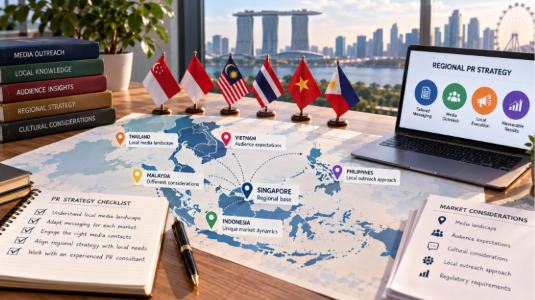
Singapore may be the regional base, but it is not a substitute for local knowledge. Indonesia has its own media landscape. Malaysia has different audience expectations. Other Southeast Asian markets bring their own considerations.
Companies seeking PR services in Indonesia should ask how local outreach will be managed and whether communications will be adapted for the intended audience. The same goes for PR services in Southeast Asia more broadly. One regional strategy can provide consistency, but the execution may need to change from market to market.
A PR consultant in Singapore can help businesses refine their messages, plan media outreach and assess their communications priorities.
Choosing the Right PR Partner
Cost is part of the decision. It should not be the only part. Compare the proposed services, the experience of the people handling the account and the agency’s approach to reporting. Ask about urgent support, too, especially if your business operates across different time zones. A low fee may look attractive until you discover that the support you need is not included.
The company also has responsibilities. It must share accurate information, make decisions in a reasonable time and ensure that the agency can speak to the right people internally. Even a capable communications team cannot work effectively when facts are withheld or every statement gets stuck waiting for approval.
For businesses considering PR consultancy in Singapore, APRW is one option to review for corporate communications and reputation management support. Compare its proposed approach with your actual needs before making a decision. In the end, reputation is shaped by more than press coverage. People remember what a company does when something goes wrong, whether it takes responsibility and whether its actions match its words.