 Tasselline | Latest Articles By Singaporeans, for Singaporeans Article Site for Singaporeans
ISO implementation isn’t just about preparing for an audit. The system must work after the audit, too. Employees need to know what they are doing, records need to be kept, and procedures have to make sense for the actual business. Luke Philips provides support as ISO 9001 certification consultants, offering ISO consultancy, training, auditing and management system implementation for ISO 9001 and ISO 14001.
Understanding ISO 9001 and ISO 14001 Management Systems
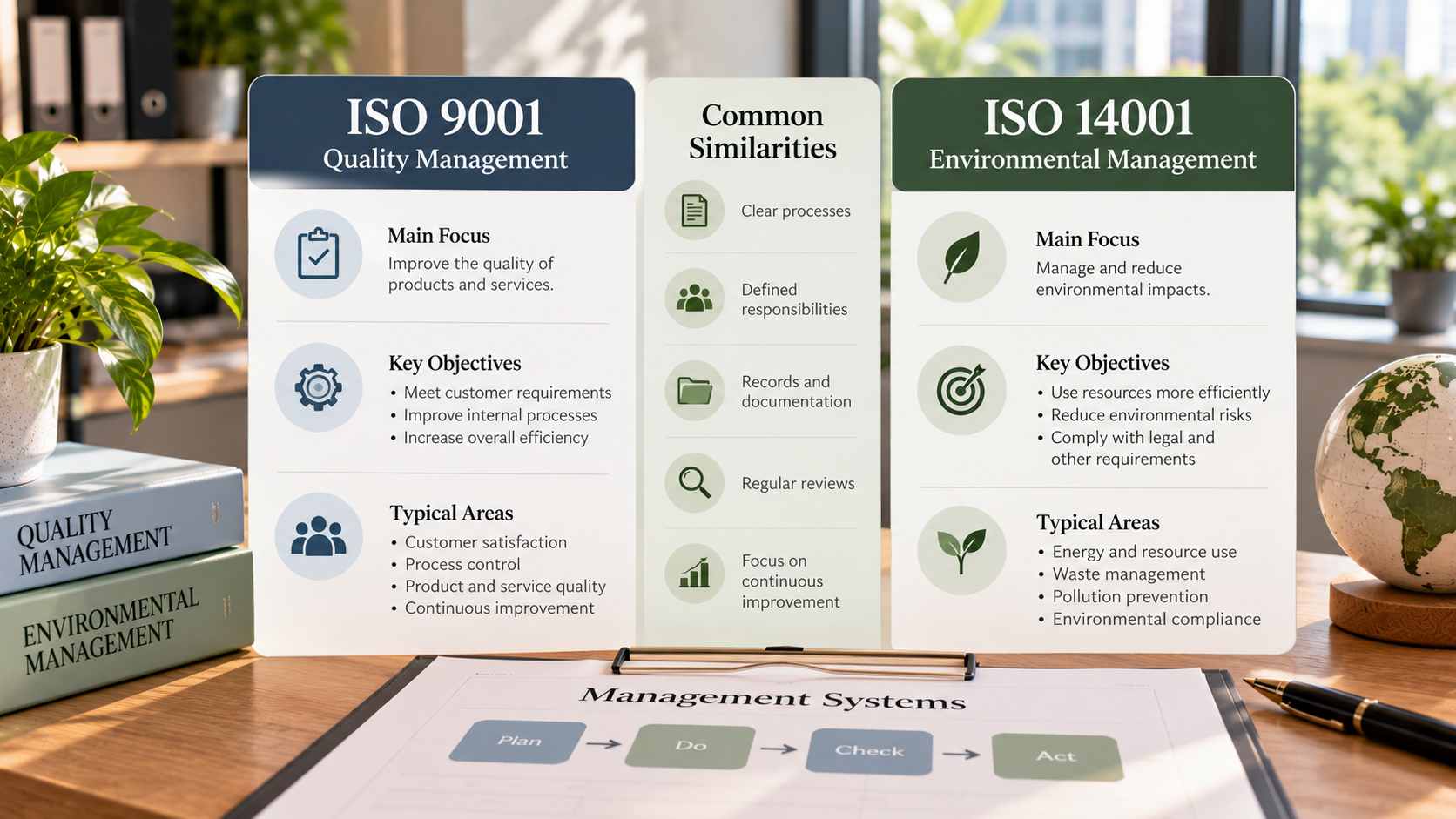
The two standards deal with different things. ISO 9001 is about quality management. ISO 14001 deals with environmental management. There are similarities, though. Both require clear processes, defined responsibilities, records and regular reviews. The important part is how those requirements fit into the business.
What Does ISO 9001 Quality Management Cover?
Businesses working with ISO 9001 certification consultants may need help making sense of the standard in relation to their existing processes.
Think about customer requirements, process controls, records and corrective actions. These areas may already exist in some form. They just might not be documented or managed consistently. That is where implementation work becomes useful. The aim is to build a system people can actually follow, rather than another set of documents sitting in a folder.
What Does ISO 14001 Environmental Management Cover?
ISO 14001 takes a different route. It looks at environmental management and how an organisation identifies and manages its environmental responsibilities. This can include environmental aspects, applicable requirements, objectives and performance monitoring.
For businesses considering ISO 14001 consulting services, the sensible place to begin is with what is already happening. Review it first. Then work out what is missing.
An ISO 14001 consultant may also help employees understand their responsibilities and establish processes that can be maintained after certification.
How ISO Management System Implementation Works in Practice
There is a common mistake here. A business can have a very neat management system on paper and still have employees who do not know what to do with it. Implementation is about closing that gap.
How Does an ISO Gap Analysis Identify Implementation Needs?
A gap analysis compares existing practices with the requirements of the chosen standard. Procedures are reviewed. Records are checked. Workflows may be looked at more closely too. Some areas might already be fine. Others may need attention.
This makes gap analysis an important part of ISO management standard implementation. It shows where the business actually stands before anyone starts rewriting everything.
For organisations beginning ISO certification in Singapore, Luke Philips can support areas such as gap analysis, documentation, implementation guidance, training and audit preparation.
How to Develop Practical ISO Documents and Procedures
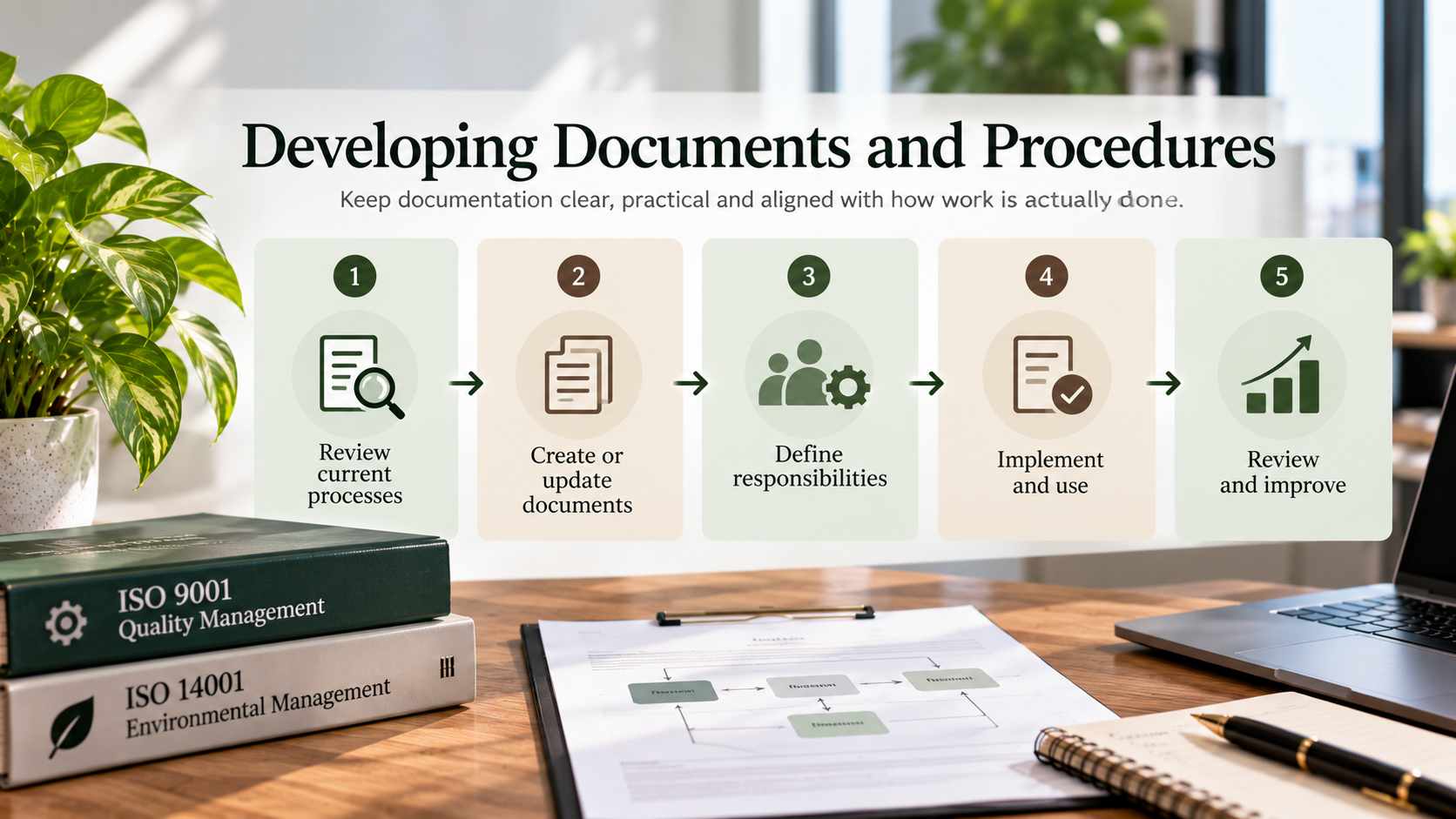
Not every process needs a five-page procedure. Sometimes a clear, simple document is enough. The documentation should reflect the way work is really done. Otherwise, employees end up following one process while the paperwork describes another.
For organisations working with ISO 9001 certification consultants, this can mean updating quality procedures, clarifying responsibilities and improving record-keeping.
Environmental systems need the same practical thinking. ISO 14001 consulting services may cover areas such as waste, resource use, environmental risks and applicable requirements. The paperwork should support the process, not become the process.
What Should You Check Before the Certification Audit?
Before the external audit, a few basic questions can reveal a lot:
- Do employees understand the procedures they are expected to follow?
- Are records being maintained properly?
- Are internal audits actually finding issues?
- Are corrective actions being completed?
- Does management review what is happening and decide what needs attention?
Small gaps are easier to deal with internally. Finding them during the certification audit is another matter.
How to Prepare for ISO Certification in Singapore
Certification comes after implementation, internal review and an external audit by a certification body. So the preparation cannot stop at documentation. People have to use the system. Records have to support it. Management needs to review it.
Why Are Employee Training and Internal Audits Important?
New procedures mean very little if employees do not understand them. Training gives people context. What changed? What do they need to record? Who is responsible for what? Then there are internal audits. These provide a chance to check whether the system is being followed and whether something needs fixing before the external audit.
An ISO 14001 consultant may also support environmental management system audits by reviewing processes, records and compliance-related requirements. Internal audits are a practical part of ISO management standard implementation. They are not just another box to tick.
How Do Corrective Actions and Management Reviews Support Compliance?
An issue is not resolved simply because someone has written it down. The organisation needs to look at why it happened, decide what should be changed and later check whether that change worked.
Management review brings the wider picture together. Performance can be discussed, recurring issues can be considered, and future changes can be decided.
For businesses preparing for ISO certification in Singapore, this helps make the management system part of normal operations rather than something brought out only when an audit is approaching.
How to Choose ISO Implementation Support in Singapore
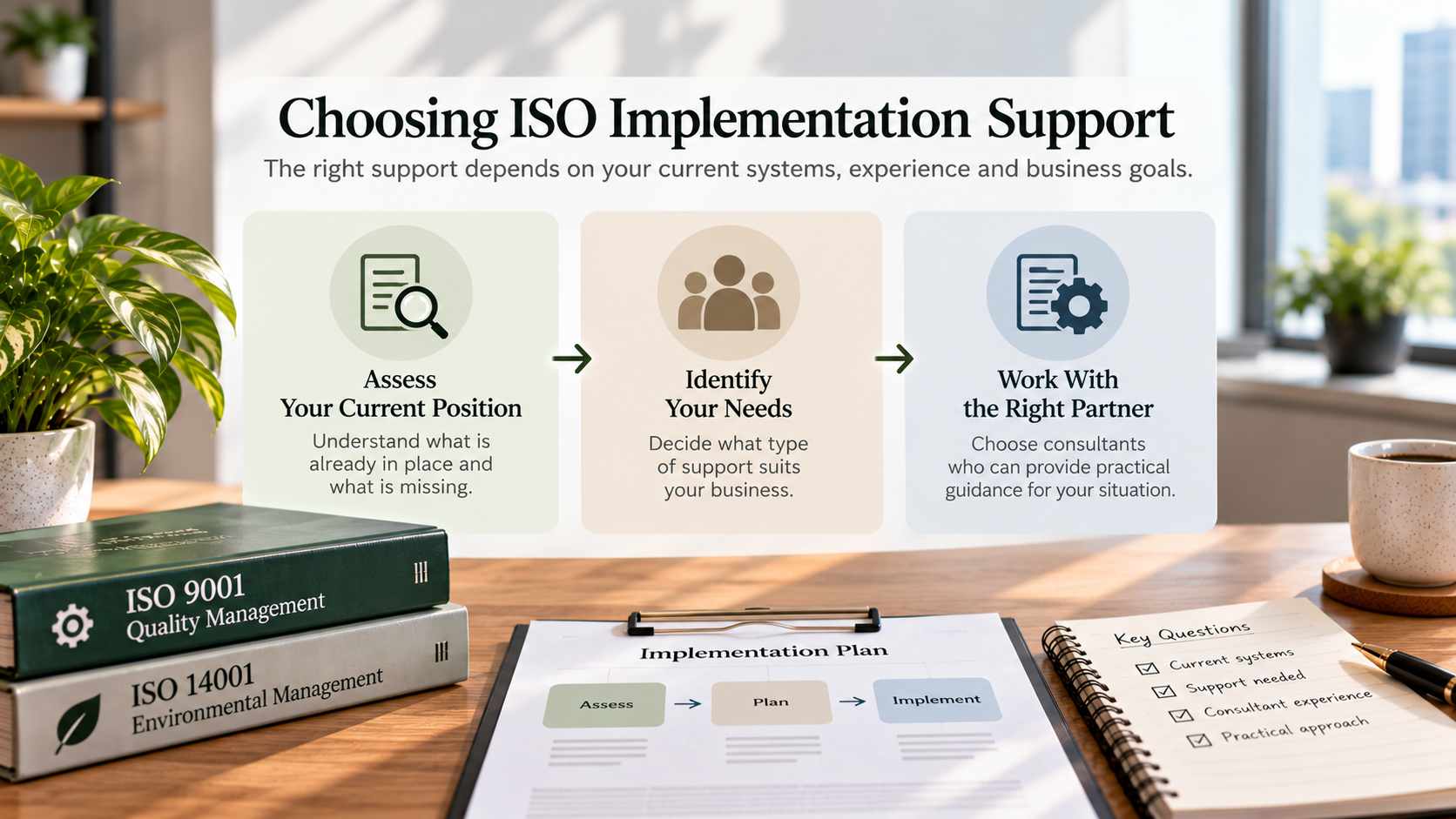
The right support will depend on the business. A company with no existing system will have different needs from one that already has documented processes and internal audits.
ISO 9001 Certification Consultants and ISO 14001 Consultants
When comparing ISO 9001 certification consultants, look at what happens before the certification audit. Is there a gap analysis? Help with documentation? Training? Internal audit support? Corrective action guidance? Those details matter.
Businesses pursuing ISO certification in Singapore should also ask how the consultant plans to work with their employees. The internal team will eventually need to run the system without constant outside involvement.
For environmental requirements, an ISO 14001 consultant should look at the organisation’s actual activities rather than applying the same process to every business.
How Do ISO 9001 and ISO 14001 Compare?
| Area | ISO 9001 | ISO 14001 |
| Main focus | Quality management | Environmental management |
| Key concern | Consistent processes and customer requirements | Environmental impacts and controls |
| Typical documentation | Quality policies, procedures and records | Environmental policies, procedures and records |
| Internal audit | Reviews the quality management system | Reviews the environmental management system |
| Improvement | Corrective action and process improvement | Environmental performance and corrective action |
For businesses considering ISO 14001 consulting services, the first question should be fairly simple: what environmental aspects come with the organisation’s actual activities? From there, the necessary controls become easier to identify.
The same thinking applies to ISO management standard implementation. Start with the business. Build around its existing workflows. Do not create procedures simply because a standard uses certain terminology.
How to Plan for ISO Certification and Implementation
An ISO 14001 consultant can help with that process while keeping environmental requirements connected to everyday work.
For businesses planning ISO certification in Singapore, proper preparation gives teams time to find gaps, train employees, conduct internal checks and deal with corrective actions before the external audit.
Luke Philips provides ISO consultancy, training, auditing and management system support for ISO 9001 and ISO 14001, including gap analysis, documentation, staff awareness, internal audits and management review.