 Tasselline | Latest Articles By Singaporeans, for Singaporeans Article Site for Singaporeans
A public speaking camp gives teenagers a chance to practise speaking in situations that feel more real than a classroom exercise. At Voice House, activities can include presentations, discussions, debates and persuasive speaking. A public speaking holiday program can give teenagers time to practise these skills without the pressure of a regular school lesson.
How Does a Public Speaking Camp Build Confidence?
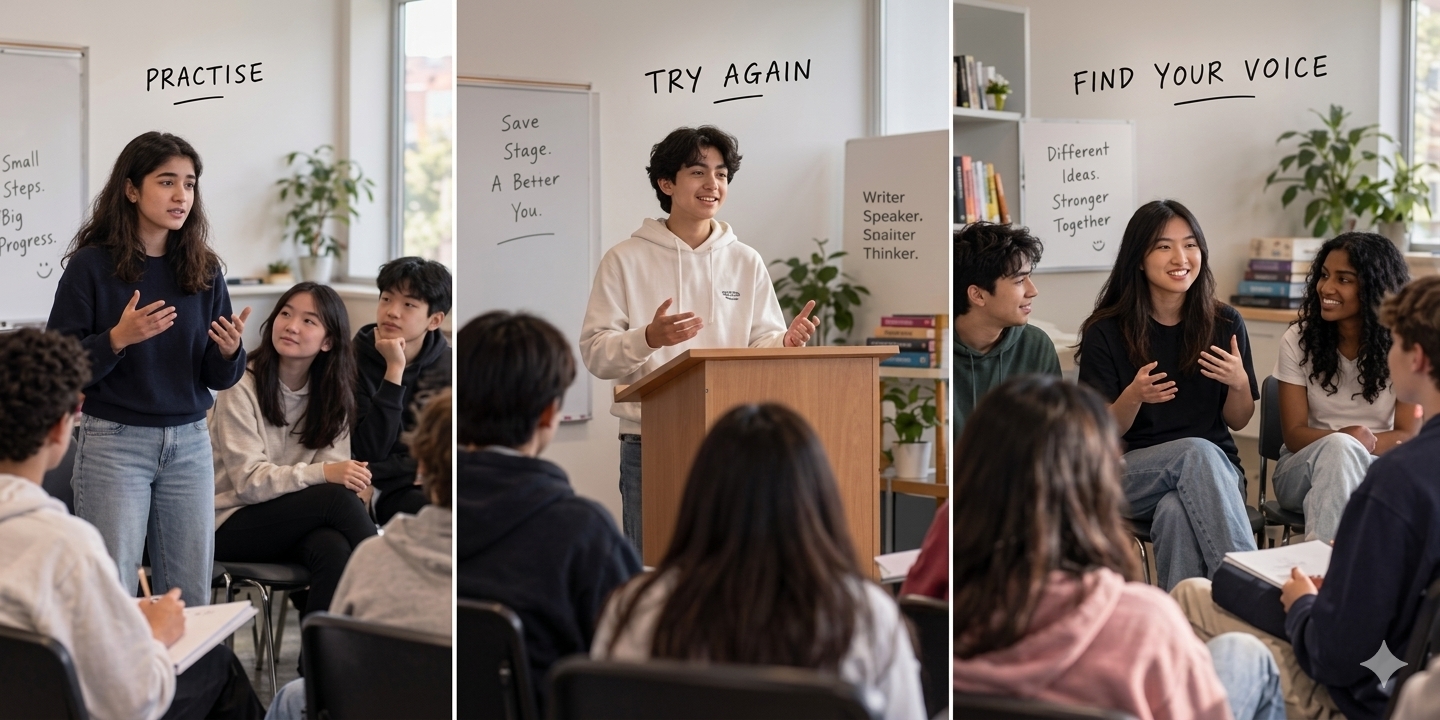
Confidence usually comes from doing something repeatedly and getting more comfortable with it. Speaking to a group can feel awkward at first, especially when teenagers are worried about forgetting their words or making a mistake.
A camp gives them opportunities to speak, listen to other students and try again. Over time, standing in front of a group can start to feel less unfamiliar.
The goal is not to make every teenager sound the same. It is to help them become more comfortable expressing their own ideas.
Can Teenagers Get Better at Structuring Their Ideas?
Having something interesting to say is only part of a good speech. Teenagers also need to know where to start, what points to make and how to bring the idea to a clear ending.
Activities similar to those found in public speaking courses for high school students can help students practise organising their thoughts before they speak. They may learn to separate a main argument from supporting examples and avoid going off track.
This skill can be useful during school presentations, group discussions and written assignments too.
What Do Teenagers Learn About Persuasive Speaking?
Persuasive speaking is not a case of raising one's voice or having a commanding voice. A speaker has to know what he wants to persuade people of and why they should listen.
In persuasive speech classes for children in Singapore, children might learn to make a case, to select relevant instances and to consider the audience they're addressing. Speaking also involves addressing questions while keeping the focus of your speech.
These exercises are tools to help teenagers think more carefully about how they communicate an opinion.
How Do Debate Activities Improve Speaking Skills?
In any debate, young people learn to handle ideas that are not their own by actively listening, being able to comprehend another position and formulating a response instead of passively waiting to speak.
Debate classes for kids in Singapore may include creating speeches, posing questions and answering them for the specified time period. Your child also gains the knowledge that to answer correctly, he should hear the question carefully.
That can make a difference outside competitions too. Conversations often involve disagreement, and knowing how to respond calmly is a useful communication skill.
Which Speaking Skills Can Teenagers Practise?
A camp can cover several small skills that come together during a presentation or discussion. Some may seem simple, but they can affect how clearly a teenager gets their message across.
• Speaking clearly
• Projecting their voice
• Making eye contact
• Using natural body language
• Organising ideas
• Listening and responding
A public speaking holiday program may combine these skills through different activities instead of teaching them all as separate exercises. This gives teenagers a chance to use them while they are actually speaking.
Why Is Feedback Important?
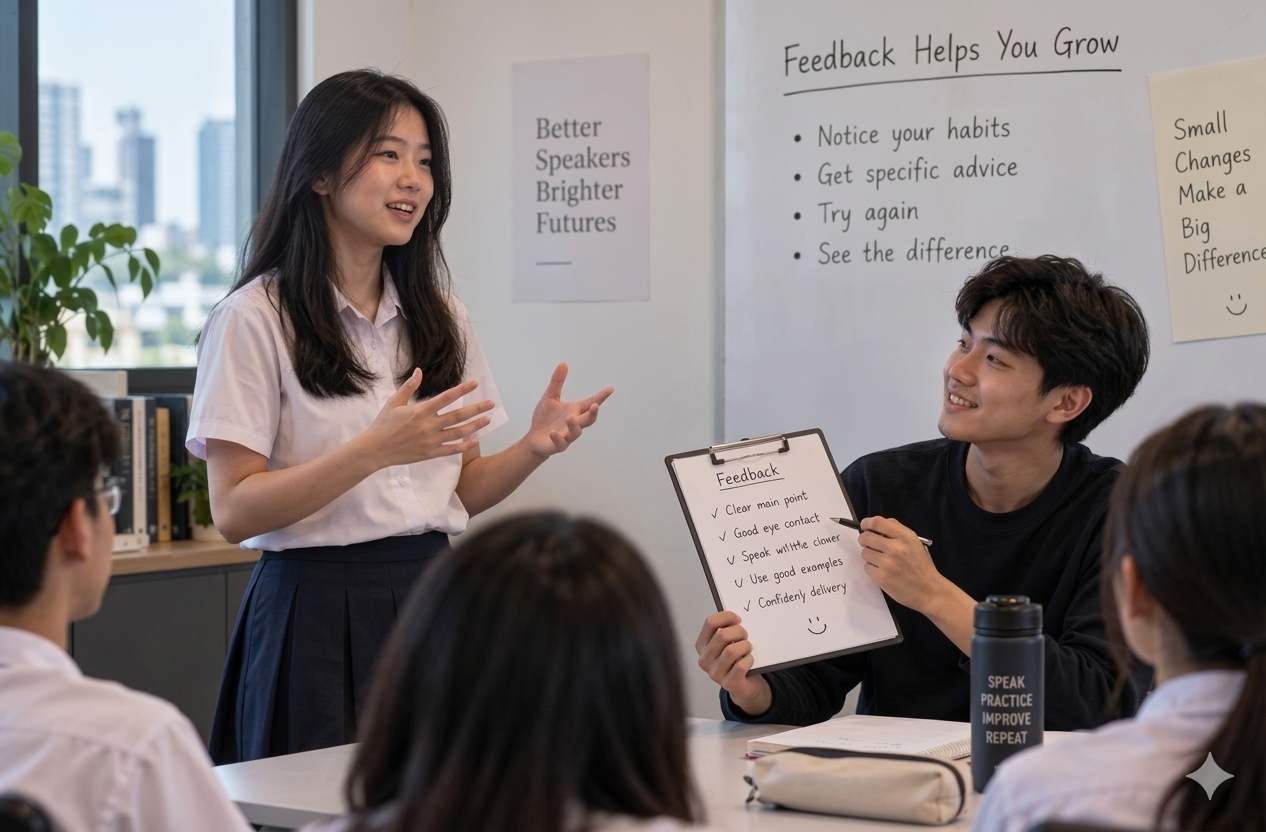
It is not always easy to notice your own speaking habits. A teenager might speak too quickly, look down frequently or give an answer without explaining the main point.
Feedback gives them something specific to work on. They can try the activity again and see whether the change makes a difference.
Voice House can use this kind of practice to help teenagers work on the areas that need attention rather than simply telling them to “be more confident”. Public speaking courses for high school students can also benefit from this approach because students at this age are often developing different communication habits.
How Can These Skills Help Outside the Classroom?
Public speaking is not limited to standing at a podium. Teenagers may need to explain an idea during a group project, answer questions during an interview or present their work to classmates.
The same applies to persuasive speaking classes for kids in Singapore. Learning how to support an opinion and respond to another point can be useful during everyday conversations as well as formal speaking activities.
The ability to listen, organise a thought and explain it clearly can follow a teenager into many different situations.
What Should Parents Look For in a Public Speaking Camp?
Not every programme will suit every teenager. Some students may enjoy debates, while others may prefer presentations, storytelling or group discussions.
|
What to look for |
Why it matters |
|
Speaking activities |
Gives teenagers time to practise rather than only listen |
|
Feedback |
Shows them what they can work on |
|
Different exercises |
Lets them practise more than one type of speaking |
|
Group work |
Gives them experience speaking with other students |
|
Age-appropriate tasks |
Keeps activities relevant to their stage of learning |
Parents looking at debate classes for kids in Singapore can also check how much actual speaking time students receive. A programme with plenty of opportunities to practise gives teenagers more chances to apply what they have learnt.
How Do You Choose a Programme That Fits Your Teenager?

Start with what your teen is comfortable doing and what they'd like to do better. An adolescent who does not like to speak in front of groups might like to improve with a slow build-up to short speeches, while a teenager who likes a good debate might need more of a challenge.
It is also worth looking at the age group, session format and types of activities included. Public speaking courses for high school students should give older teenagers tasks that feel relevant to their school life and the situations they may encounter later.
The right programme does not need to cover every possible speaking skill. It should give the teenager enough practice to work on the areas that matter to them.
Giving Teenagers More Time to Practise
Speaking well takes practice. Teenagers need opportunities to put ideas into words, listen to different viewpoints and learn from the way they communicate.
A public speaking holiday program can bring these activities together during a period when students have more time to focus on them. Debate classes for kids in Singapore can add another layer of practice by giving them opportunities to argue a point, listen and respond.
For teenagers who want to become more comfortable speaking, The Voice House provides a setting where these skills can be practised through different activities. The aim is simple: give students more opportunities to speak, think and communicate clearly.