 Tasselline | Latest Articles By Singaporeans, for Singaporeans Article Site for Singaporeans
Starting a sewing project does not mean buying every tool in the shop. A few essential sewing supplies can handle measuring, cutting, stitching and small repairs, while tailors and garment businesses may need more equipment for regular work. Knowing what each item does makes it easier to build a sewing setup around the kind of work you actually do.
What Do You Need to Start Sewing?
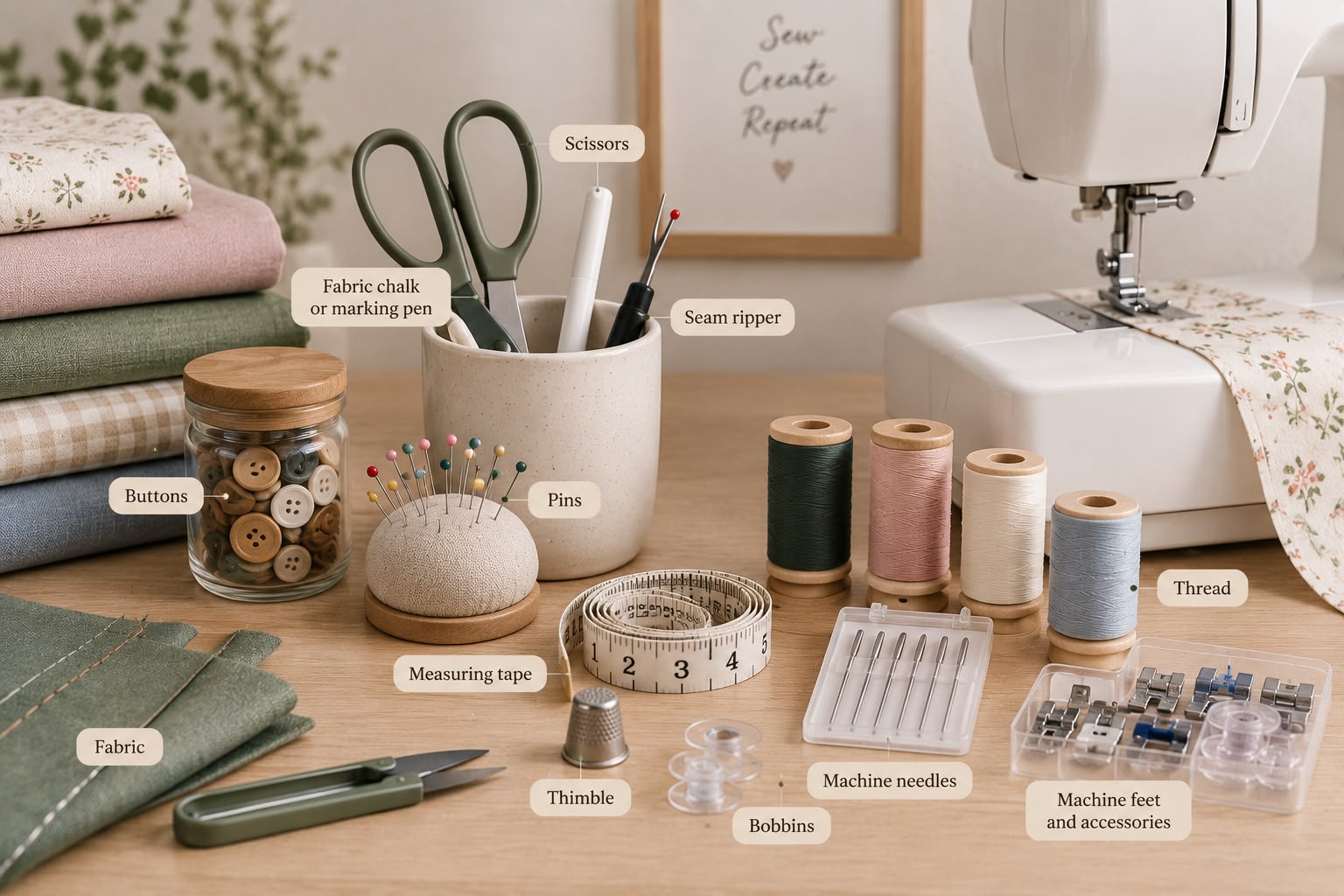
A beginner can get going with a small box of sewing supplies and accessories. Measuring tape, fabric scissors, needles, thread, pins and a seam ripper will cover most basic jobs.
There is no need to fill a cupboard before starting. Buy the things you will use often, then add other tools when a project calls for them.
Which Tools Help With Measuring and Marking?
Measurements are much easier to handle when you have the right tools beside you. A measuring tape is useful for body measurements, checking fabric and following a pattern.
Rulers, seam gauges, fabric chalk and washable markers can help with hems, seams and cutting lines. These accessories for sewing clothes are small, but they can save a lot of guesswork when you are working on a garment.
Choose a marking tool that suits the fabric. What works on cotton may not be right for a delicate or dark material.
What Do You Need for Cutting Fabric?
Good cutting starts with a pair of scissors that is actually meant for fabric. Keep smaller snips nearby for loose threads, and keep a seam ripper handy for those stitches that need to come out.
A simple cutting kit might include:
- Fabric scissors for cutting cloth
- Thread snips for trimming loose threads
- Seam ripper for removing stitches
- Fabric chalk or a washable marker
- Ruler for straight lines and measurements
These high quality sewing supplies and accessories come in handy throughout a project, not just at the cutting stage.
Which Items Help During Stitching?
A sewing machine does not do everything on its own. You will still need needles, thread, bobbins and pins, and the right choice can change with the fabric.
Machine needles come in different sizes and types. Lightweight fabric may need something different from denim or heavier cloth. Thread also needs to match the material and the kind of stitching being done.
Keeping a few sewing accessories and supplies together makes it easier to switch between projects without stopping to look for another needle or thread.
What Should a Beginner Keep in a Sewing Kit?
A beginner’s kit can stay fairly small. The point is to have the things you reach for regularly, rather than a box full of tools that never leave the drawer.
| Tool | What it is used for |
| Measuring tape | Taking body and fabric measurements |
| Fabric scissors | Cutting fabric |
| Sewing needles | Hand stitching and repairs |
| Thread | Joining and finishing fabric |
| Pins | Holding fabric pieces together |
| Seam ripper | Removing unwanted stitches |
| Fabric marker | Marking fabric before sewing |
| Thread snips | Trimming loose threads |
These essential sewing supplies are enough to handle a good range of simple sewing jobs. More specialised items can be added later.
What Do Tailors Need Beyond the Basics?
Tailors tend to repeat the same jobs all day: measuring, cutting, fitting, stitching and altering. Having professional sewing supplies within reach can make that routine less frustrating.
The exact setup depends on the work. Someone who mainly alters trousers and dresses will have different needs from someone who makes garments from patterns.
Pattern rulers, pressing tools, extra needles and fitting tools may become useful as the workload grows. A tailor may also need professional sewing supplies that are suited to particular fabrics or machines.
Which Supplies Are Useful for Garment Businesses?
A garment business needs tools for more than the final stitching. Fabric has to be measured, marked and cut; pieces have to be joined, and finished garments may need small changes before they are ready.
The right garment sewing supplies depend on what you make. A business producing shirts may need a different setup from one making uniforms, dresses or heavier clothing.
It also helps to keep everyday sewing accessories and supplies where they are easy to reach. Losing time over missing bobbins, needles, or thread is frustrating when several pieces are waiting to be finished.
How Do You Choose Accessories for Sewing Clothes?
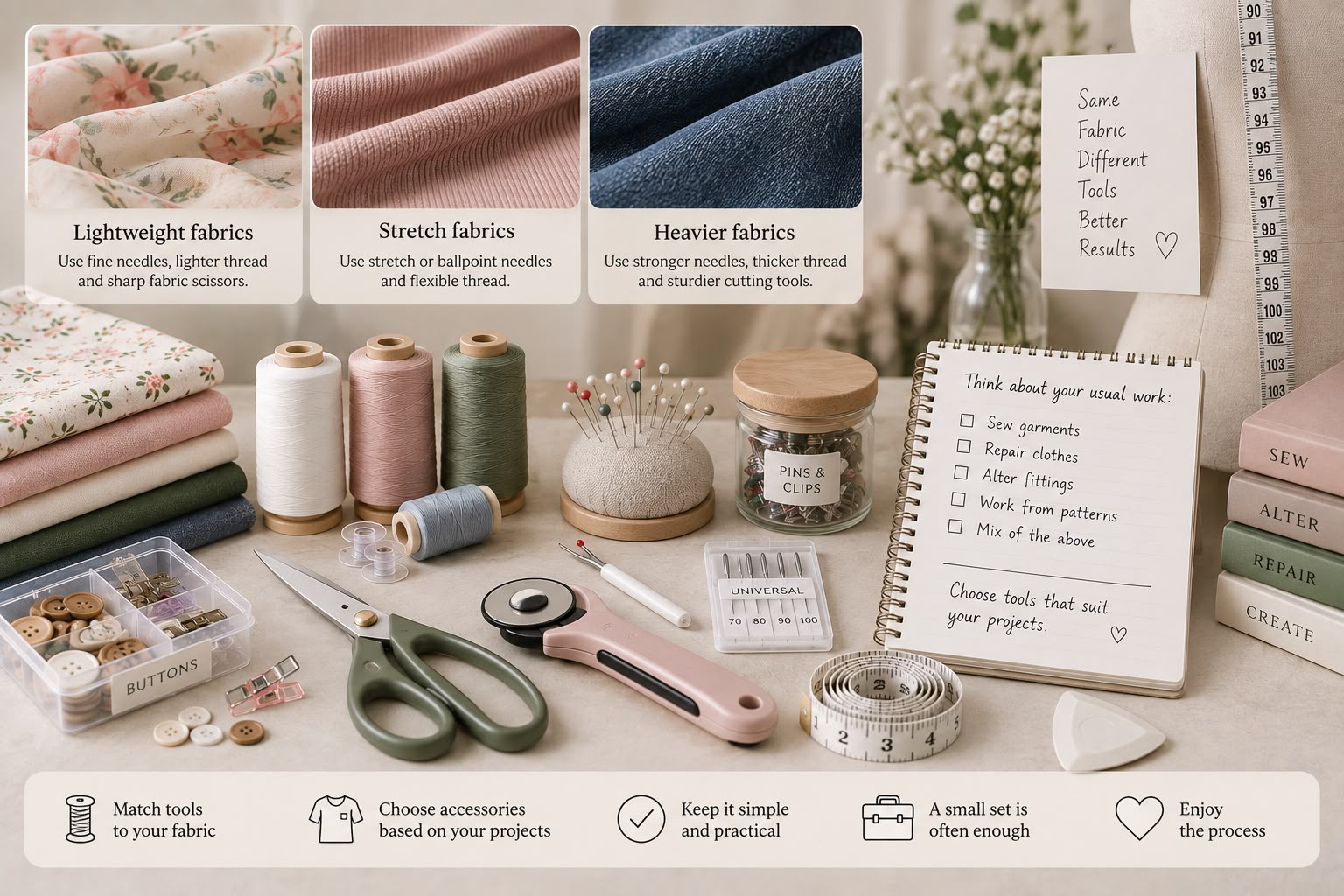
Start with the fabric you work with most. Lightweight cloth, stretch material and heavier fabrics can all call for different needles, threads and cutting tools.
The same goes for accessories for sewing clothes. Think about whether you mostly sew, repair, alter or make garments from patterns. Your usual work should decide what you buy.
You do not need several versions of every tool. A small set of useful items is often easier to manage.
What Should You Check Before Buying?
Before buying clothes accessories for sewing, look at what you already own. A new tool should solve a problem or make a job easier, rather than simply add to the collection.
For professional sewing supplies, comfort and suitability matter when the tools are used every day. Check the size, material and intended use, especially for scissors, needles and measuring tools.
It is also worth thinking about quantity. Buying a large pack of something you rarely use usually leaves you with more storage than you need.
How Do You Build a Sewing Setup Over Time?
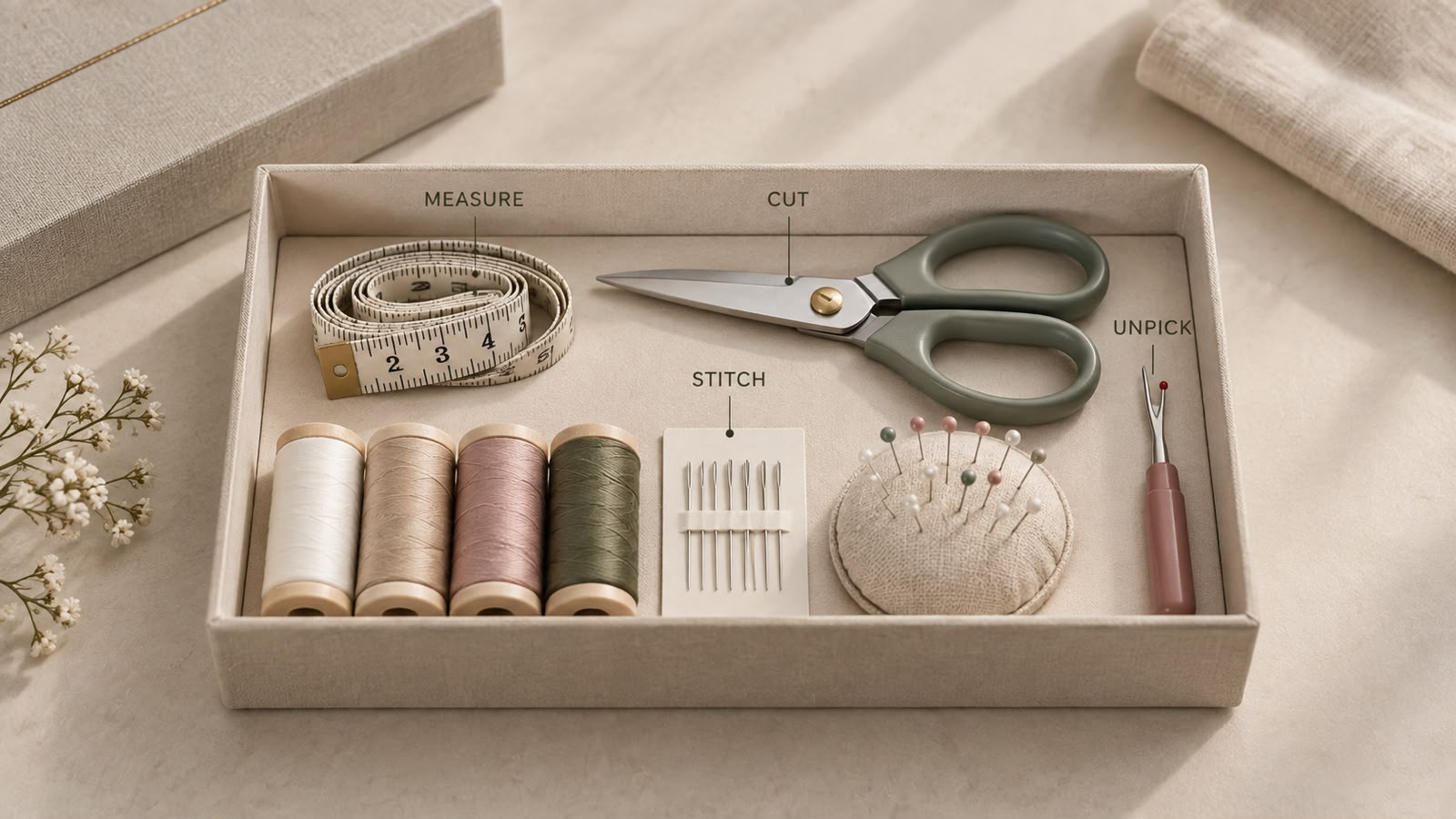
Your sewing setup can grow as your work changes. Start with the essential sewing supplies you use most, then add tools when you start taking on different projects.
For garment sewing supplies, think about the clothes you make regularly and keep those items close at hand. There is little point in buying production tools that do not match your workload.
For clothes accessories for sewing, choose pieces that fit the fabrics, patterns and alterations you actually handle.
How Can You Keep Your Sewing Supplies Organised?
Good organisation does not have to mean a complicated storage system. Keep scissors, measuring tools and marking items together, and store needles, thread and bobbins where they are easy to find.
A labelled box or a few small containers can make sewing accessories and supplies much easier to find. The same approach works for garment sewing supplies, particularly when several people are working in the same space.
SHCK supplies sewing products for different sewing and garment-making requirements. Whether you are learning at home, tailoring clothes or handling garment production, choosing professional sewing supplies around the work you actually do can keep the setup simple and useful.