 Tasselline | Latest Articles By Singaporeans, for Singaporeans Article Site for Singaporeans
The two classes teach children to speak, but they do it in different ways. A debate class for children in Singapore is built around taking a side, making a point and responding to someone who disagrees. Public speaking is less focused on debate and can include speeches, presentations, storytelling, and everyday speaking activities.
What Is the Main Difference Between Debate and Public Speaking?
The biggest difference is what the child has to do with their ideas.
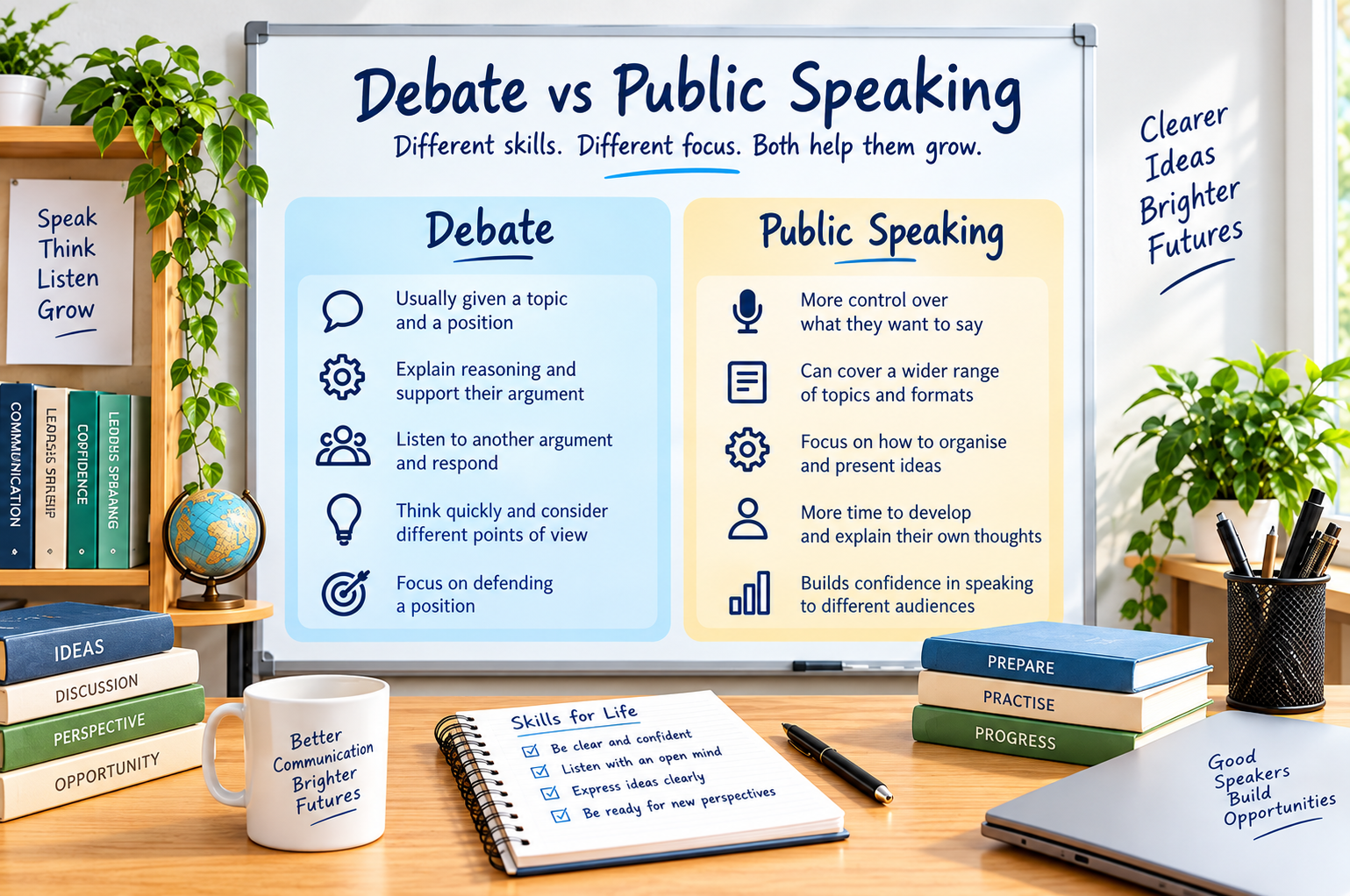
During a debate, a child is usually given a topic and a position to defend. They need to explain their reasoning, listen to another argument and respond to it. A public speaking course for students in Singapore can cover a wider range of activities where the child may have more control over what they want to say.
The two formats can feel quite different in practice. Debate asks children to listen to another point of view, think about their response and put their own argument across. Public speaking usually gives them more time to focus on how they organise and present what they want to say.
What Do Children Learn in Debate Classes?
Debate is about more than speaking confidently. Children have to understand the topic, decide what they think and find a clear way to explain their position.
A debate class for children in Singapore may involve preparing arguments, asking questions, responding to the other side and taking part in timed exchanges. They learn to listen properly because they cannot give a useful response without first understanding the point being made. Children have to listen closely because their response needs to address what the other speaker has actually said.
They also get used to the idea that an opinion needs an explanation. Saying that they agree or disagree is only the starting point. They have to explain why.
What Do Children Learn in Public Speaking Classes?
Public speaking covers a wider set of situations. A child might give a short speech one day and tell a story, present an idea or answer questions on another.
Public speaking for kids can also involve practising pace, voice projection, eye contact and body language. These details matter because a well-organised idea can still be difficult to follow when it is delivered too quietly or too quickly.
The activities can be adjusted to suit the child's age, so younger children do not have to approach speaking in exactly the same way as older students.
Is Debate More About Arguments?

Yes, but it is not simply about arguing with someone.
A debate has rules, a topic and usually a clear structure. Children have to support their position while paying attention to what the other side is saying.
Debate classes for kids in Singapore may include timed speeches, questions and rebuttals. That combination makes children think on their feet rather than relying entirely on something they prepared beforehand.
The ability to disagree without turning the conversation into a personal conflict is another part of the experience. The discussion stays centred on the topic.
Is Public Speaking Only About Giving Speeches?
No. Speeches are only one part of it.
Public speaking for teens can include presentations, storytelling, interviews, group discussions and impromptu speaking. A student may be given a topic and a few minutes to organise their thoughts before speaking.
A public speaking course for students in Singapore can therefore involve both prepared and spontaneous activities. This gives students practice with situations where they know what they will say and others where they have to think before responding.
Which Skills Do Both Classes Have in Common?
There is some overlap, particularly when it comes to communicating clearly. The difference is how those skills are used.
• Speaking clearly
• Organising ideas
• Listening to others
• Responding to questions
• Using appropriate body language
• Speaking to an audience
Public speaking for kids may use these skills during a presentation or storytelling exercise, while debate uses them when a child has to put forward and defend a position.
How Do You Choose Between the Two?
Look at what your child actually enjoys and what they find difficult.
A child who likes asking questions, discussing different viewpoints or challenging ideas may enjoy the structure of debate. Someone who wants more practice with presentations, storytelling or speaking to a group may prefer a broader public speaking class.
Voice House can use different speaking activities to give children practice in these areas. The class format, age group and amount of speaking time are worth checking before making a choice.
Can a Child Benefit From Both?
The two formats can complement each other because they ask children to use similar communication skills in different ways.
Debate gives them practice with responding to another person's ideas. Public speaking gives them more opportunities to work on delivery, presentation and speaking to an audience.
Public speaking for teens can therefore sit alongside debate rather than replacing it. A teenager who already enjoys debate may still have areas of presentation and delivery that they want to practise.
What Should Parents Look For in a Class?
The name of the class does not tell you everything about what happens during the session. Look at the actual activities and how much opportunity children get to speak.
|
What to look for |
Why it matters |
|
Age group |
The activities should match the child's stage |
|
Class size |
Smaller groups can give children more chances to speak |
|
Speaking time |
Practice matters more than simply listening to explanations |
|
Feedback |
Children need to know what they can improve |
|
Activity format |
Different tasks show how the class actually works |
Parents considering debate classes for kids in Singapore can also ask whether children get to respond to one another or mainly prepare speeches. That distinction gives a clearer picture of what the sessions involve.
Which Class Might Suit Your Child?
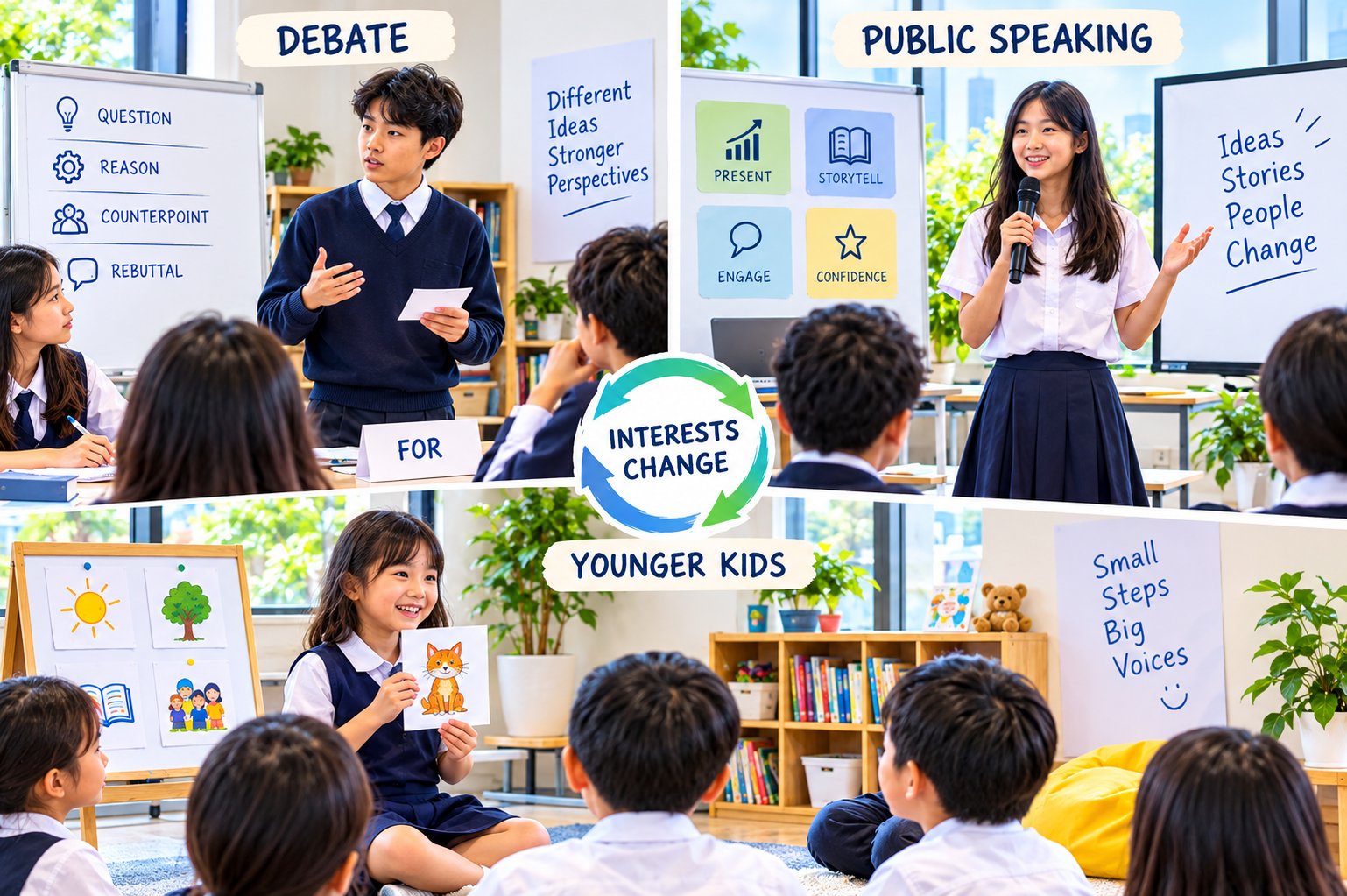
A child interested in questioning, reasoning and defending a point may want to try a debate class for children in Singapore. Someone who feels nervous about presentations or wants to become more comfortable addressing a group may need more general speaking practice.
Public speaking for teens can also suit students who want to work on presentations, storytelling or answering questions without a debate format. For younger children, public speaking for kids can be introduced through shorter and more familiar activities.
There is no need to make the choice permanent. A child's interests can change, and the type of practice they need can change with them.
Giving Children More Opportunities to Speak
The useful part of either class is the opportunity to practise rather than only learn about speaking. Debate classes for kids in Singapore give children a structured way to question, argue and respond, while public speaking activities cover a wider range of situations.
The Voice House gives children space to practise these communication skills through activities suited to the class. Looking at the actual format, practice time and areas covered will tell you much more than the class name alone.