 Tasselline | Latest Articles By Singaporeans, for Singaporeans Article Site for Singaporeans
An LPG cylinder should not be stored just anywhere around a building. A drain nearby can turn a small gas leak into a fire or explosion hazard. LPG vapour is heavier than air, so it can move along the ground and enter drains, pits or underground spaces. If you run a business in Singapore and use LPG gas, you really need to think carefully about where you store those cylinders.
So, Why Is It Risky to Keep LPG Cylinders Near Drains?
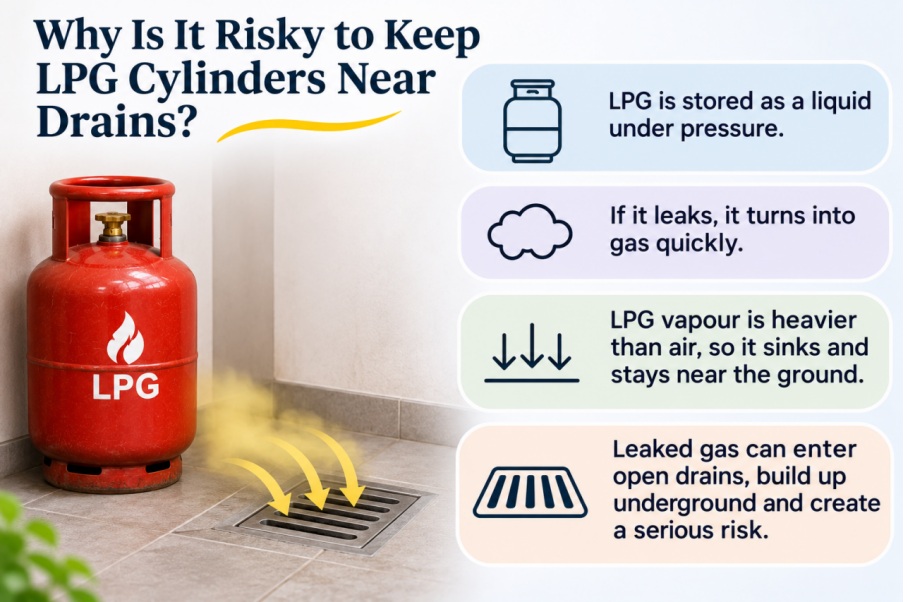
Well, LPG is stored as a liquid under pressure, but once it leaks out, it turns into gas almost instantly. And here’s the thing: LPG vapour is heavier than air, so it doesn’t just float away. Instead, it sinks and hangs around close to the ground.
That’s where drains become a real problem. If there’s an open drain nearby, leaked gas can slip right into it and find its way underground. Since those spaces usually don’t get much fresh air, the gas can build up instead of escaping. That’s a recipe for danger.
How LPG Vapour Can Collect Inside Drains
A gas leak does not always stay close to the cylinder. Vapour can travel across the ground and enter an uncovered drain, even when the opening is some distance away.
Underground drains and inspection chambers need particular attention. Air may not circulate properly inside them, allowing leaked gas to accumulate. You might not see anything unusual until the vapour comes into contact with a spark or flame.
Businesses using Singapore LPG gas should check the surroundings before deciding where to keep their cylinders. A spare corner beside a drain may look convenient, but that does not make it suitable for storage. If you’ve got questions about getting LPG, YLH Gas is ready to help. But it’s up to businesses to make sure their storage setups are safe and meet all the necessary rules.
Why You Can’t Ignore Drain Openings
Leaving LPG cylinders too close to drains is risky, especially if the opening sits lower than the cylinder and isn’t covered. That’s why Singapore has clear rules about how far cylinders need to be from any drains or uncovered openings: you really can’t skip this step. For installations with a capacity of up to 600kg, the required distance is at least 1.5 metres. For larger installations, it is at least 3 metres.
Restaurants and food outlets that store several cylinders together should pay particular attention to these requirements. Businesses should check the applicable storage rules before choosing an LPG supplier in Singapore or arranging a new installation.
What Can Happen When a Cylinder Leaks Near a Drain?
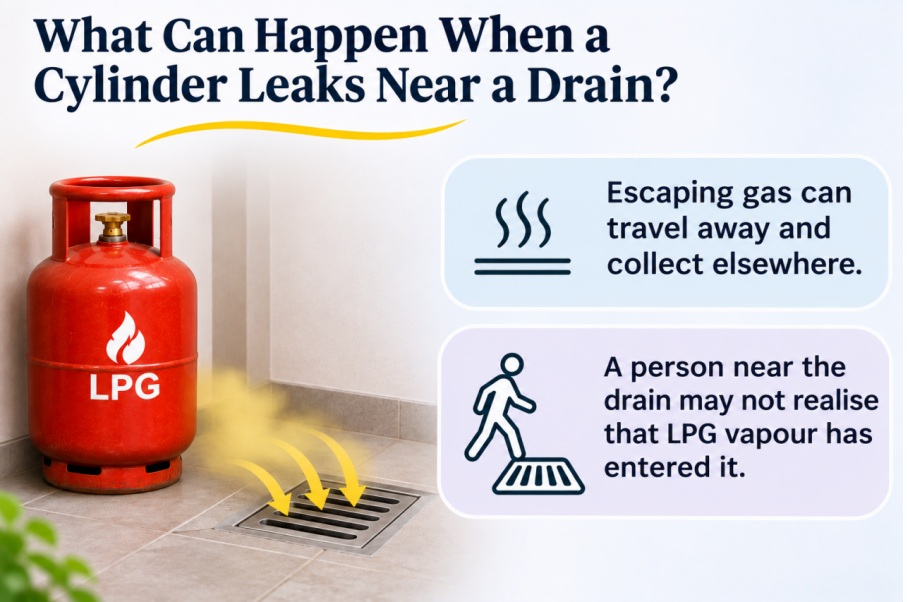
The danger does not end where the leak begins. Escaping gas can travel away from the cylinder and collect somewhere else.
A person walking near the drain may not even realise that LPG vapour has entered the opening.
Fire and Explosion Risks
LPG is highly flammable. If the vapour mixes with air just right, all it takes is a spark or flame to ignite it.
Things get trickier if there’s a drain nearby: LPG gas in Singapore can drift away from the cylinder, so the fire might actually start far from where the leak began.
Here’s what you need to watch out for:
- Gas can build up inside drains or inspection chambers.
- A fire could spread quickly toward nearby buildings or equipment.
- An explosion caused by accumulated gas meeting an ignition source.
- Injuries to people working or walking nearby.
Do not approach a suspected leak to find out where the gas is coming from.
Risks to Nearby Buildings and People
Drains are often located close to kitchens, walkways, service areas and building entrances. This means a leak from a cylinder storage area could affect people who are not even near the original source.
If you run a restaurant and use ESSO LPG gas in Singapore, take a good look at the layout before you choose where to store the cylinders. Don’t just focus on convenience: think about nearby spots like underground openings, entrances, and anywhere people walk through often. You want those gas cylinders well out of the way, in a spot that’s safe for everyone.
How Should LPG Cylinders Be Stored Safely?
Cylinders should be kept outdoors in a well-ventilated area. They also need a firm, level surface and must remain upright.
Keep them at the required distance from uncovered drains, pits and other low-level openings. The storage area should also allow safe access for inspection and handling.
Here’s How to Store LPG Cylinders Safely
- Always keep cylinders standing upright.
- Make sure there’s enough space between cylinders and any drains or openings.
- Protect them from getting knocked over or tampered with.
- Take a good look at regulators, hoses, and joints for any obvious signs of damage.
- Keep cylinders far from open flames or anything that could spark a fire.
If you’re in Singapore, your LPG supplier should walk you through the basics of safe handling and storage. On top of that, businesses need to double-check that their storage setup meets all the rules for their location.
Storage Areas and Their Safety Requirements
| Storage consideration | Safety purpose |
| Distance from drains | Reduces the risk of vapour entering low-lying openings |
| Firm, level surface | Keeps cylinders stable and upright |
| Open ventilation | Allows leaking gas to disperse |
| Cylinder protection | Prevents accidental damage and tampering |
| Clear access | Allows access to the installation during an emergency |
What Should You Do If You Suspect an LPG Leak Near a Drain?
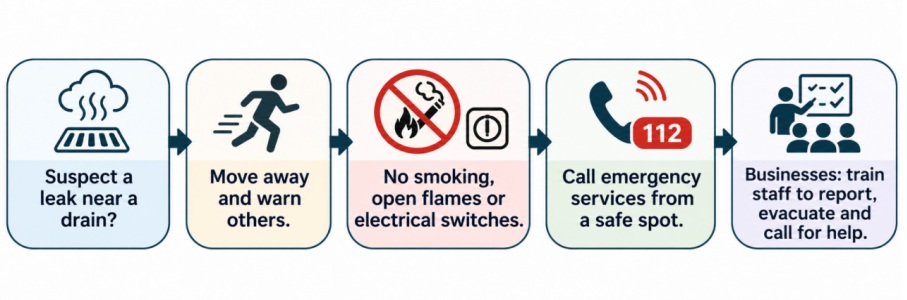
Do not wait around to identify the source of a suspected leak. Move away from the affected area and warn others to stay clear.
Anyone using LPG gas service in Singapore should avoid smoking, lighting a flame or operating electrical switches nearby. Do not approach the drain or try to locate the leak yourself.
If you notice a gas leak, get to a safe spot and call emergency services right away. Don’t try to move a leaking cylinder unless the emergency team tells you it’s safe.
Businesses need to make sure everyone knows how to report a gas leak. Staff should be clear on how to sound the alarm, evacuate quickly, and call for help.
Looking for an LPG supplier in Singapore? Ask them how they handle cylinders, how they deliver, and how often they check their equipment. Whether you’re using ESSO LPG gas in Singapore, always store cylinders well away from drains: that’s just basic safety. If you have any questions about LPG supply or safe handling, YLH Gas is there to help.