 Tasselline | Latest Articles By Singaporeans, for Singaporeans Article Site for Singaporeans
A sustainable renovation does not have to mean buying a whole new set of cabinets, flooring and furniture. In many Singapore homes, the greener option is to keep what still works and replace only what needs attention. There are other things worth considering, too. Paint, lighting, kitchen fittings and even the way rubbish is handled can affect the finished home. Hausmark Pte Ltd., Singapore is one option homeowners can explore when searching for the best interior design in Singapore, but the first question is simpler: what actually needs changing?
Choose Materials That Work in Singapore’s Climate
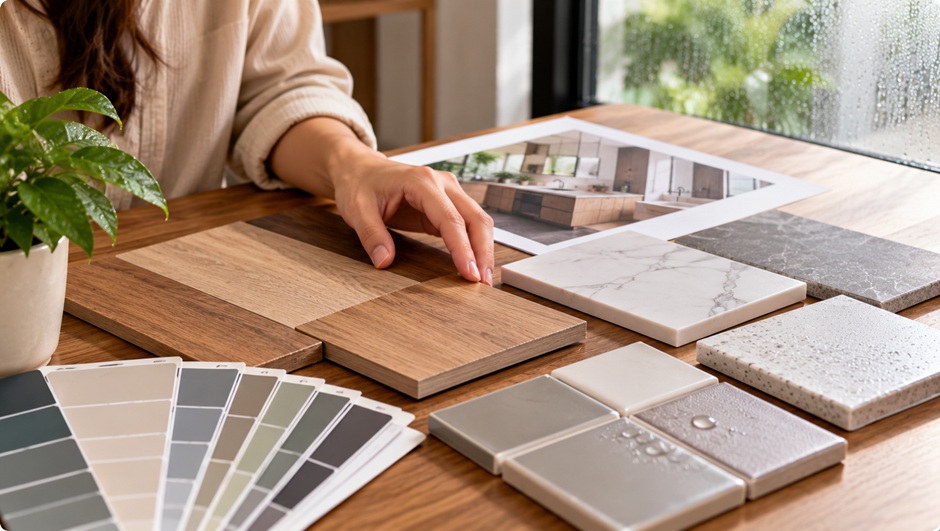
Materials need to cope with Singapore’s humidity, particularly in kitchens, bathrooms and poorly ventilated corners. A finish that looks lovely in a showroom can be a poor choice once it is exposed to moisture every day.
Reuse Before You Replace
Look at the existing furniture and fittings before ordering new ones. A wardrobe may need fresh doors, not a new frame. Kitchen cabinets might be perfectly usable after replacing worn hinges and handles. And that old wooden dining table? If the structure is sound, refinishing it could be enough.
- Keep cabinets and wardrobes that are still structurally sound.
- Repair loose hinges, drawer runners and handles.
- Refinish wooden furniture where possible.
- Reuse suitable leftover tiles or timber for smaller features.
- Replace damaged parts instead of discarding entire units.
There is a limit, of course. Mouldy boards and water-damaged cabinets should not be kept simply to avoid waste. Reclaimed timber also needs checking for damage and appropriate treatment before indoor use. A recommended interior designer in Singapore should be able to explain what is worth saving and what could cause trouble later.
Pick Materials That Are Easy to Maintain
Moisture resistance matters in Singapore. Poorly sealed timber can swell or warp, while some boards deteriorate when water reaches exposed edges. Pay particular attention to kitchen cabinets and bathroom storage. Ask how the material is sealed and what happens if it gets wet.
When comparing the best interior design in Singapore options, ask about cleaning, repairs and expected lifespan. Can a damaged panel be replaced on its own? Does the surface need special cleaning products? These questions are less exciting than choosing colours, but they can save money later. A material that lasts is often a better choice than one that needs replacing after a few years.
Lower Energy Use and Choose Healthier Finishes
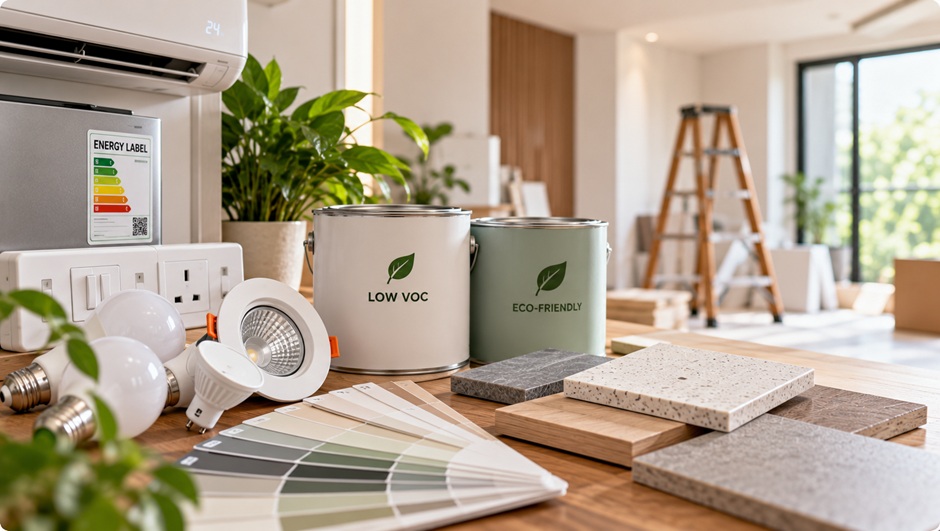
Lighting and appliances affect electricity use every day. Paint and adhesives matter for a different reason: some release compounds into indoor air. Both deserve attention before the renovation is finished.
Choose Lighting and Appliances Carefully
LED lights generally use less electricity than traditional incandescent bulbs and last longer. They also come in different colour temperatures, so choose according to the room. Kitchen worktops need clear light. A bedroom may feel more comfortable with a softer tone. There is no need to make every room equally bright.
Appliances deserve a proper comparison, too. Check energy labels and choose a size that suits your household. A large refrigerator or air-conditioner is not automatically better. A good interior design plan in Singapore should take room size, sunlight and daily use into account before recommending replacements. If the existing appliance still works well, replacing it purely for the sake of renovation may not make sense.
Look at Paint and Adhesive Ingredients
Low-VOC paints, adhesives, and sealants can reduce emissions of volatile organic compounds from certain products. This is worth considering in bedrooms and other enclosed spaces, especially when several new materials are being installed at once.
Do not rely on the words “eco-friendly” on the packaging. Check the product specifications and any relevant emissions information. Low-VOC does not mean emission-free, and the home still needs ventilation during and after renovation. An interior design review in Singapore may give you ideas about questions to ask, but the actual product details are what matter when choosing a finish.
Make Furniture Last and Reduce Renovation Waste
Furniture that can be repaired or adapted is less likely to end up in the rubbish pile. It can also save you from buying replacements whenever your needs change.
Check Quality Before Buying
Look at the frame, joints, upholstery and hardware. A sofa with removable covers may be easier to clean, while a cabinet with replaceable hinges can stay useful for years. Cheap furniture can be tempting when the renovation budget is already stretched, but poor construction may mean buying the same item twice.
| Design choice | Possible benefit | What to check |
| Reclaimed timber | Gives existing material another use | Treatment and moisture resistance |
| LED lighting | Can reduce electricity use | Energy consumption and lifespan |
| Low-VOC finishes | Can reduce certain indoor emissions | Product specifications |
| Repairable furniture | Extends the item’s useful life | Replacement parts and repair options |
| Reused cabinets | Avoids unnecessary replacement | Structural condition and layout |
Customer feedback may help when comparing suppliers, but it cannot tell you exactly how long a product will last in your home. Check the warranty and ask about replacement parts. Hausmark can be assessed using the same criteria: material quality, maintenance needs and whether the proposed choices are practical for everyday use.
Leave Room for Changing Needs
A home that works today should still be useful a few years from now. Adjustable shelving, movable furniture and storage that serves more than one purpose can be especially helpful in compact HDB flats.
Be cautious about filling every available corner with permanent built-ins. They may look neat now but can be awkward to change later. Neutral finishes and replaceable decorative details offer more freedom. When looking for a recommended interior design firm, ask whether the proposed layout can adapt if your storage needs or room use changes.
Plan the Sustainable Choices Before Work Starts
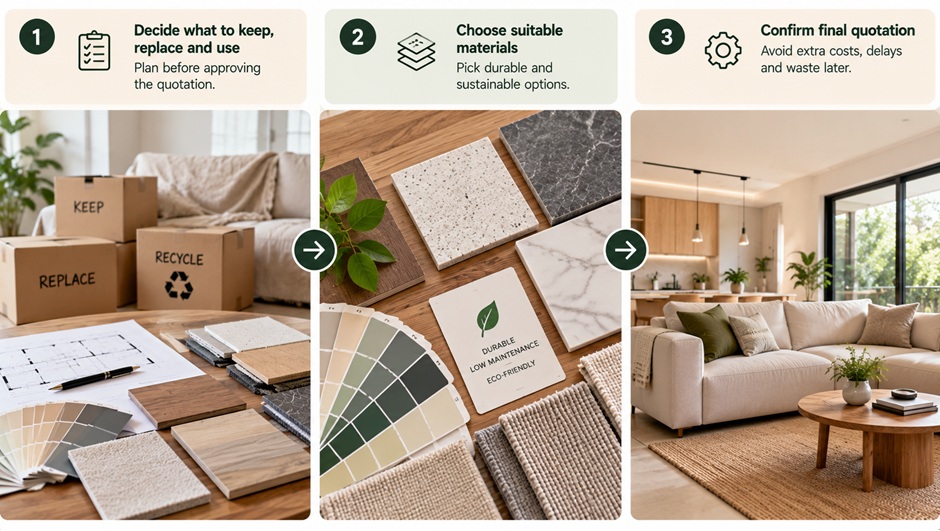
Decide what to keep, what to replace and which materials to use before approving the final quotation. Once demolition and installation begin, changing your mind can mean extra labour, additional purchases and more waste.
Ask Clear Questions Before Hiring
Ask the designer which materials are proposed, how they should be maintained and whether existing furniture can be retained. Find out what happens to leftover tiles, timber and other renovation waste. Request written specifications and a breakdown of costs. You should know what you are paying for.
- List the furniture and fittings that can stay.
- Compare appliance energy labels and running costs.
- Check material care instructions and expected lifespan.
- Ask how leftover materials will be handled.
- Get approved changes and extra charges in writing.
A recommended interior design firm search is a useful starting point, but compare the actual proposals rather than the sales pitch. A recommended interior designer in Singapore should be able to explain the choices and their costs without making every product sound perfect. The best interior design in Singapore for your home is one that suits your budget, daily routine and maintenance expectations. Before choosing any interior design firm, check the Hausmark evaluation, then compare the material specifications, reuse options and proposed energy-saving measures, and make sure the final agreement reflects what was discussed.