 Tasselline | Latest Articles By Singaporeans, for Singaporeans Article Site for Singaporeans
Food packaging has seconds to make an impression. A bottle catches the light. A label stands out on a crowded shelf. Or it doesn’t. Strong product photography helps customers recognise the brand, understand what they are buying, and read the details before deciding. Planning matters just as much as the shoot. Memoire can help businesses prepare images around their packaging, brand identity and intended use.
Plan Around the Packaging
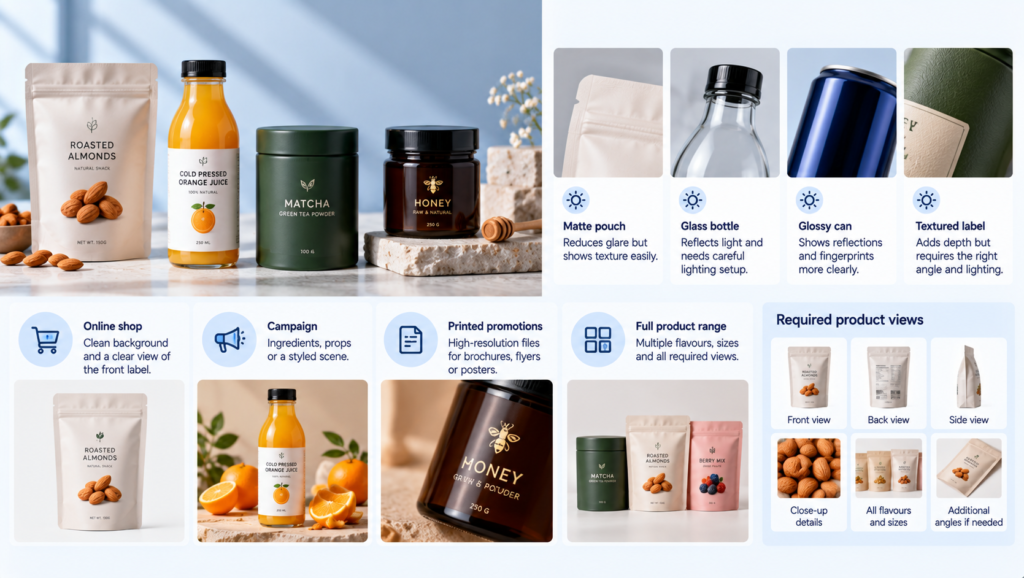
A matte snack pouch behaves differently under studio lights from a glass bottle or a glossy can. Shape, colour, texture and label placement all affect the result. Start with the actual products, not a mood board alone.
Know Where the Images Will Appear
An online shop often needs a clean background and a clear view of the front label. A campaign may call for ingredients, props or a styled scene. Different jobs. Different images. For Singapore product photography, decide early whether the files are intended for retailer listings, websites, printed promotions or all three.
Write down every required view before the session. Front, back, sides, close-ups. Include each flavour and package size, too. This helps when product photography covers a whole range rather than one item. Nobody wants to discover after the shoot that a new bottle size was never photographed.
Prepare Labels and Packaging
Dust shows up. So do fingerprints, crooked labels and creases in a pouch. Clean each package and check its condition before the photographer starts. Small fixes now can save a long round of editing later.
Look at the label artwork as well. Is the product name readable? Is this the final design? If the artwork is still being updated, make sure you lock in the approved version before the shoot. Swapping out images after you change the packaging isn’t quick—it can push the whole launch back. When you’re planning product photography in Singapore, nailing down the final artwork early really helps keep everything moving on schedule.
Get Lighting and Styling Right
Lighting can make a package look crisp and inviting. It can also hide the label behind glare. Glass, metal and glossy wrappers need special attention. One badly placed reflection can cover the very detail customers need to see.
Manage Reflections on Different Materials
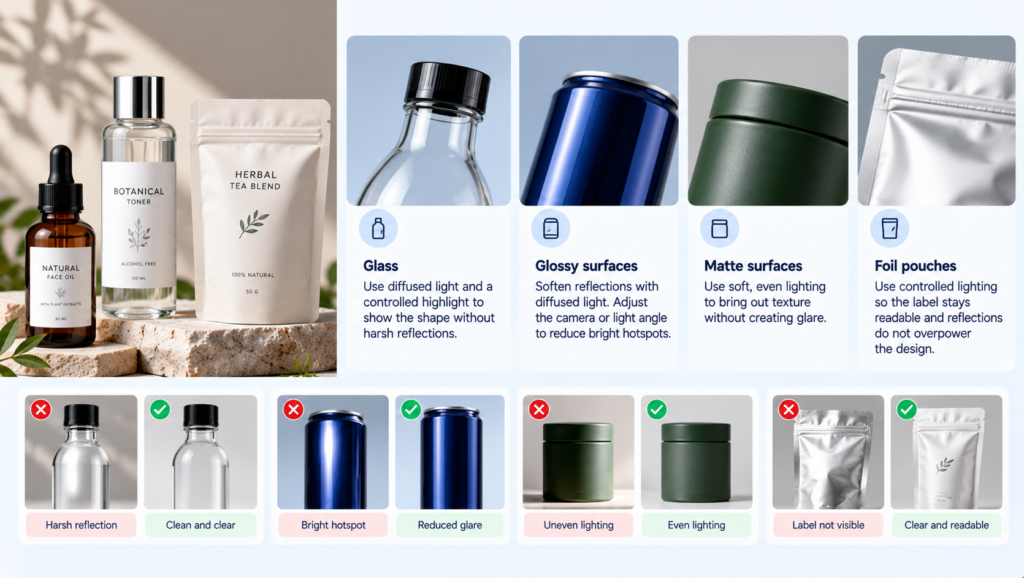
Diffused light helps soften harsh reflections. Moving the camera or light slightly may be enough to remove a bright hotspot. Check the label from the angle that will appear in the final image, not just from where you are standing.
For Singapore product photography, lighting should suit both the material and the brand’s visual style. A clear bottle may need a narrow highlight to show its shape. A foil pouch usually needs more controlled light so its label stays visible. Memoire can help plan a consistent look across a product range rather than treating every package as a separate job.
Use Props Without Distracting From the Product
Fresh fruit can suggest a drink’s flavour. A few grains or nuts may give a food product useful context. But props can quickly take over. Keep them purposeful and leave the packaging easy to see.
A product photoshoot may include clean product views and styled scenes, but each has a job. Use simple compositions for product listings; save elaborate settings for campaigns. When products photography covers several items, repeat the same visual rules so the images feel connected. Consistency matters when the pictures sit side by side on a website.
Build a Shot List and Check Delivery
A shot list sounds basic. It prevents expensive oversights. The photographer, designer and marketing team should agree on the required images before the session. Review a few sample shots while the lights and products are still set up.
Capture the Essential Views
- Front-facing images with the main label clearly visible.
- Back and side views when product information needs to be shown.
- Close-ups of logos, label details and distinctive materials.
- Group images showing flavours, sizes or product variants.
- Lifestyle images showing the product in a relevant setting.
During a product photoshoot, keep the camera angle, lighting and framing consistent across items in the same range. That makes the files easier to use together on product pages, promotional materials and retailer listings. It also makes future additions easier to match.
Confirm Formats and Dimensions
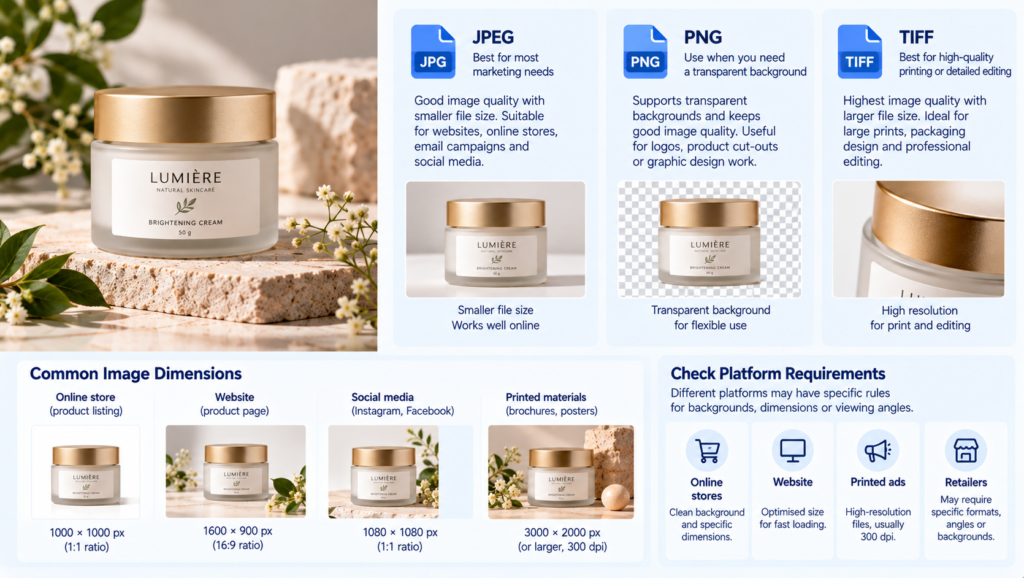
Get high-resolution files that match what you need them for, and ask for smaller ones if you’ll use them on websites. JPEG usually does the job for most marketing needs, but sometimes you’ll want TIFF files if you need to do a lot of printing or editing. Talk things through with your designer, printer, or retailer before the shoot—everyone’s requirements are a bit different.
If you’re handling a product photography project in Singapore, you’ll probably need different versions for online stores, your company’s website, and any printed ads. Some platforms specify backgrounds, dimensions or viewing angles. Find that out early. Fixing a whole batch afterwards wastes time.
| Requirement | What to check |
| Label visibility | Important text and branding are readable |
| Packaging condition | Surfaces are clean, and labels sit properly |
| Colour accuracy | Colours look consistent and realistic |
| Image dimensions | Files suit the platform or print size |
| File format | Delivery matches the agreed requirements |
| Range consistency | Products share a consistent style and framing |
For Singapore product photography, check platform rules and delivery details before the session. Agree on file names, formats and deadlines, too. A tidy handover sounds minor until someone has to find one specific flavour image among dozens of unnamed files. Businesses planning product photography in Singapore should confirm these details before the photographer begins.
Before booking a product photoshoot in Singapore, confirm the shot list, styling direction, file formats and intended usage in writing. Memoire can help businesses plan photography for food packaging and beverage labels, with images suited to their marketing needs.