 Tasselline | Latest Articles By Singaporeans, for Singaporeans Article Site for Singaporeans
Keeping the eye still during laser cataract surgery is important. But patients cannot always control every small movement. They may blink, squeeze their eyelids or shift their head without realising it. A sudden movement can disturb the laser’s contact with the eye and interrupt treatment. During Bladeless Cataract Surgery in Singapore, a docking system helps hold the eye in position. The same concern applies to Cataract Surgery in Singapore when laser-assisted steps are involved.
Why Does Eye Movement Matter During Laser Cataract Surgery?
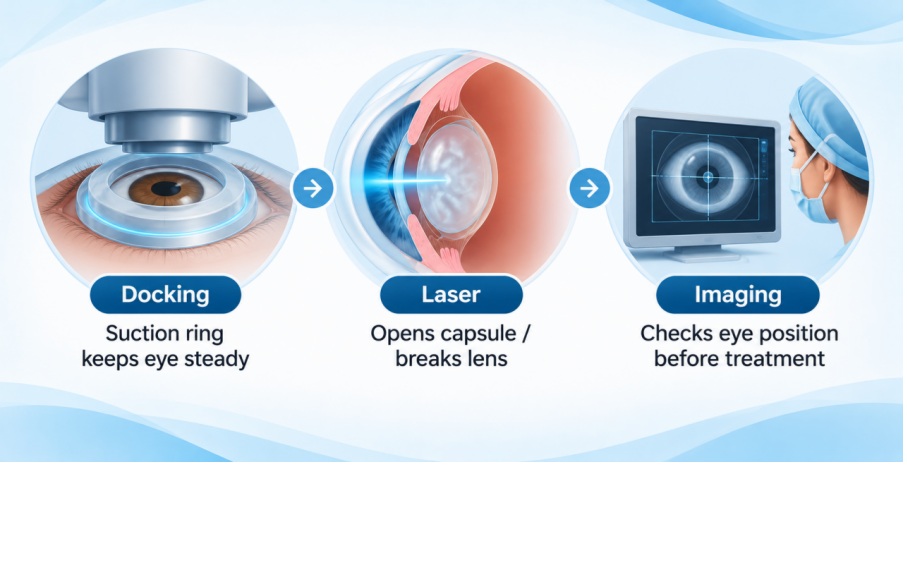
Before the laser starts, the surgical team connects the eye to the machine using a patient interface. This is known as docking. A suction ring secures the eye in position for the laser to operate in the proper location.
The laser can then open the capsule of the lens, or shatter the non-clear lens into smaller pieces. It requires a secure link to carry out these stages accurately. During Bladeless Laser Cataract Surgery in Singapore, the imaging systems assist the doctor in examining the eye’s position before treatment.
What Happens When the Eye Moves?
The impact is a function of the type and magnitude of movement. A subtle movement may not cause any problem. An abrupt movement can dislodge the suction ring or alter the eye’s position relative to the laser.
The connection may break. This is called suction loss. The laser can stop, and the surgeon will check what has already been completed before deciding how to continue. A case report described a patient who moved during laser treatment and developed unintended marks in the peripheral cornea after suction loss.² The incident shows why movement needs attention, even when the patient does not feel anything unusual.
Possible Effects of Sudden Eye Movement
Sudden movement can cause the patient interface to lose contact with the eye. Treatment may stop before all planned laser steps are complete. Movement during laser delivery may also affect where the laser energy reaches the eye. Depending on what has happened, the surgeon may need to repeat docking or finish some steps manually. These possibilities are relevant to Singapore Cataract Surgery involving femtosecond laser assistance.
How Does the Surgeon Manage Eye Movement?
The surgeon watches the eye and the patient interface throughout the laser procedure. Imaging shows the position of the eye and the structures being treated. If the connection becomes unstable, the surgeon can pause the laser, inspect the eye, and decide whether it is safe to continue.
Certain steps can be completed with standard surgical instruments in the meantime. The decision depends on the stage of treatment and the condition of the eye. This is also part of planning Bladeless Cataract Surgery in Singapore.
What Happens Before Treatment Continues?
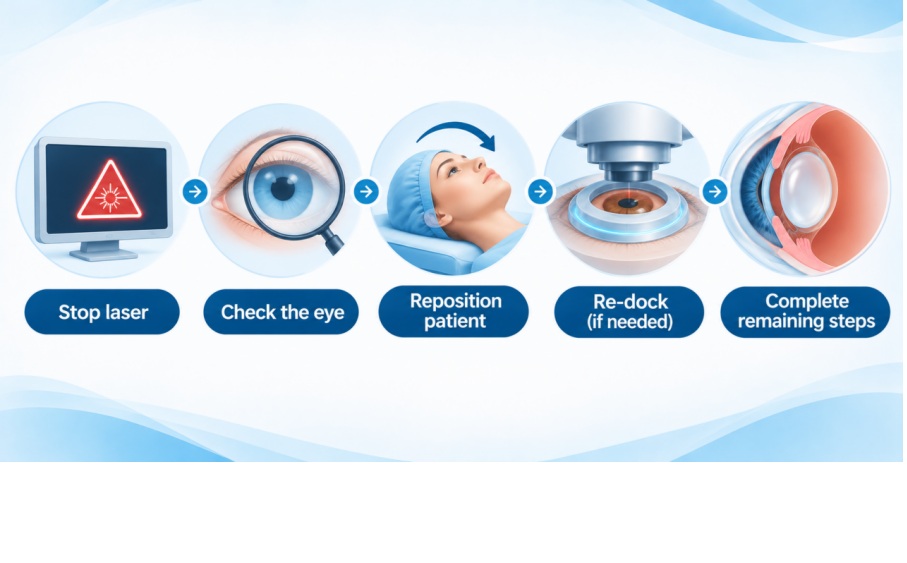
The surgeon may need to carry out several checks before restarting or changing the procedure.
| Step | Purpose |
| Stop laser delivery | Prevent further unintended laser application |
| Check the eye | Assess the cornea, capsule and treatment area |
| Reposition the patient | Restore a suitable position for treatment |
| Repeat docking if needed | Re-establish contact between the eye and laser |
| Complete remaining steps | Use laser or manual techniques as clinically appropriate |
A study of femtosecond laser procedures identified docking difficulties involving inadequate suction, air bubbles at the interface and eye movement after docking.³ Dr David Goh can explain how the surgical team checks the eye and decides whether treatment can continue safely.
Can Patients Prevent Their Eyes From Moving?
Patients do not have to stop every natural eye movement. The surgical team gives instructions before treatment and helps position the head and eye. Following those instructions can reduce avoidable movement.
During Bladeless Laser Cataract Surgery in Singapore, tell the team if you struggle to keep your head still, follow the fixation light or lie comfortably. The team can then address it before the laser starts.
How Patients Can Prepare
- Follow the clinic’s instructions before surgery.
- Keep your head in the position you were shown.
- Look where the surgical team directs.
- Avoid squeezing your eyelids or moving deliberately during treatment.
- Tell the team beforehand if staying still is difficult.
If you are interested in Singapore cataract surgery, you may want to check with your doctor how they will assist you if you have difficulty remaining still, or if you move while the laser is working. If you shift your eye, does the procedure fail? The surgeon assesses the situation and decides whether to repeat docking, use manual techniques or change the surgical plan.
Published research has described cases in which suction was lost after unintended eye movement, but the remaining procedure could still be completed using other techniques.⁴ A large cohort study has also examined complications during femtosecond laser-assisted surgery and the factors associated with them.⁵ These findings show why each incident needs to be assessed individually.
What Should Patients Ask Their Surgeon?
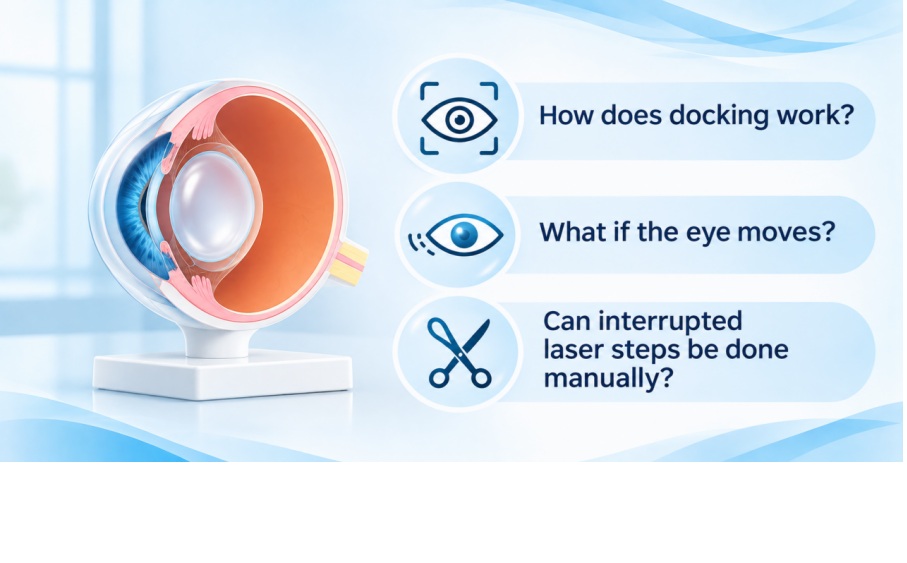
People undergoing Singapore Bladeless Cataract surgery can ask how the docking system works and what happens if the eye moves during treatment. It is also worth asking whether any interrupted laser steps can be completed manually.
Bladeless Cataract Surgery in Singapore involves specific laser-assisted steps, but the surgeon still performs and oversees important parts of the operation. Singapore Bladeless Cataract surgery patients should understand both aspects before the procedure.
Novena Bladeless Cataract Surgery can explain the laser process, possible interruptions and the options available if suction is lost. The surgical approach depends on the patient’s eye condition and the surgeon’s assessment.